90s Nostalgia Movies: Which Classics Actually Hold Up?
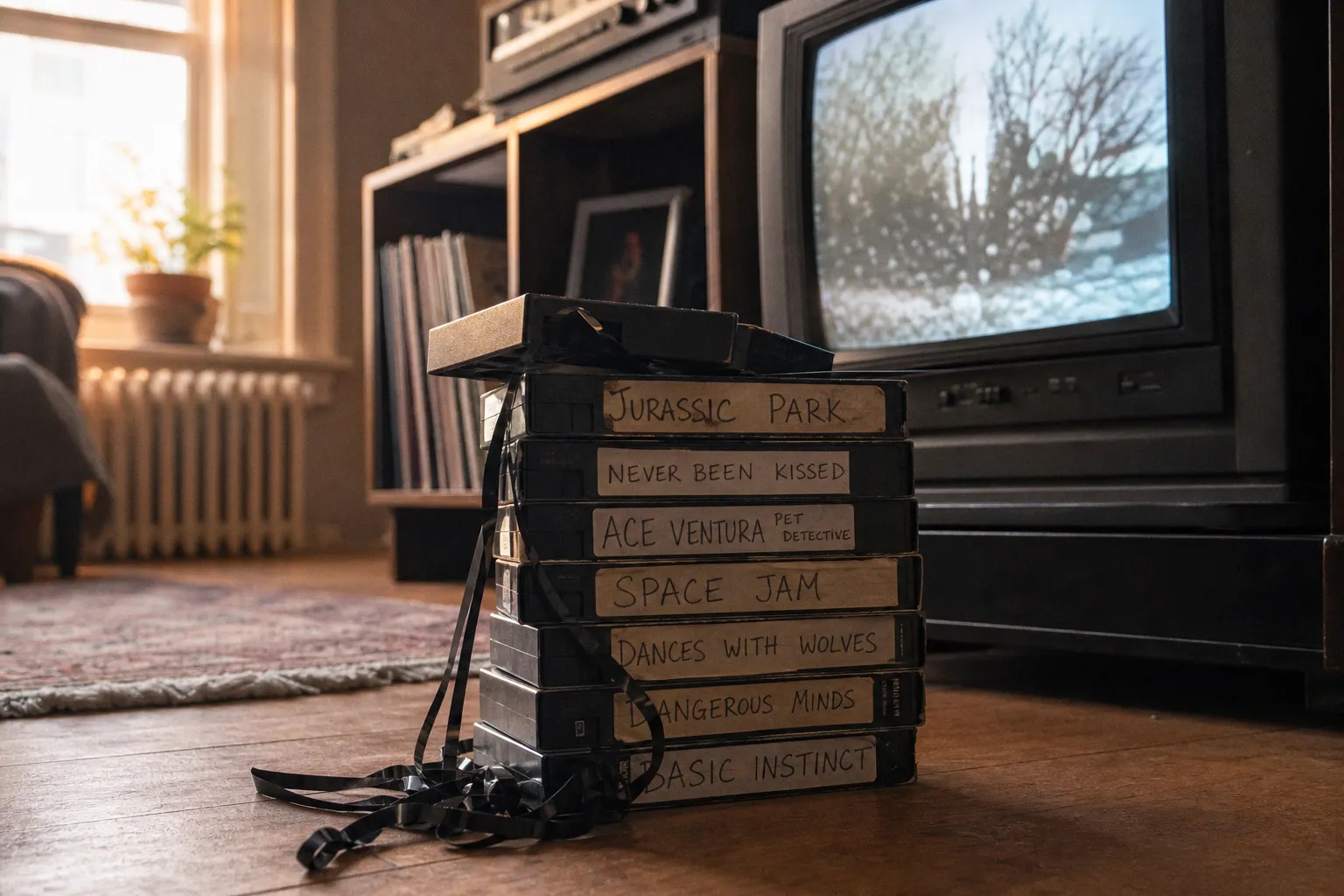
Some 90s nostalgic films still have remarkable narrative control. They know what they are, they manage their own optics, and they do not need a mercy pass from memory. Others depended on cultural blind spots, thin jokes, or marketing momentum that looks far less charming now. A rewatch is not a courtroom trial, exactly. But it is a relationship check-in: what did this movie give us then, what is it asking from us now, and are we still willing to meet it halfway?
The practical magic of 90s blockbusters: why Jurassic Park still wins
If one 90s blockbuster has aged with almost rude confidence, it is Jurassic Park. Steven Spielberg’s 1993 film remains one of the clearest examples of how technical restraint can become emotional durability. The dinosaurs still work not because the movie predicted every future visual standard, but because it understood its own limitations and built around them with discipline.
The practical effects and animatronics are doing a lot of quiet relationship maintenance here. They give the actors something real to fear, touch, and react against. The rain, darkness, and careful framing are not cosmetic flourishes; they are boundary-setting devices. The film does not overexpose what its early CGI cannot fully carry. It lets awe and terror share the frame without pushing either one into overstatement.
That is why Jurassic Park still plays beautifully for modern audiences who have seen two decades of digital creatures sprint across screens. The movie is not begging us to admire its technology. It is asking us to believe in a situation: children trapped in a vehicle, adults outmatched by their own ambition, nature refusing to be managed like a luxury product.
There is also a clean moral architecture to it. The film is wary of branding before branding became the atmosphere we all breathe. The park is not just a place; it is an entertainment machine with merch, investors, a staged visitor route, and a dangerous confidence in optics. That feels very current. If a modern franchise often turns wonder into content, Jurassic Park still remembers that wonder should have teeth.
The best rewatchable 90s movies are not frozen in time. They know how to keep negotiating with the present.
The comparison with many later effects-driven films is instructive. Some 90s movies with heavy CGI now look stranded between ambition and available tools. But it would be lazy to say “90s CGI aged badly” as a blanket verdict. Terminator 2: Judgment Day from 1991 still has a strong case because its effects are attached to simple, legible ideas: liquid metal, pursuit, transformation. Jurassic Park succeeds for a similar reason. The craft serves the pressure of the story.
Here is the practical rewatch test I use for 90s pop culture movies of this scale:
| Rewatch factor | What holds up | What dates badly |
|---|---|---|
| Visual effects | Practical effects, shadows, selective CGI, tactile sets | Overlit digital spectacle with no physical weight |
| Story stakes | Clear danger and emotional consequences | Plot built mainly to showcase technology |
| Character function | People making understandable mistakes under pressure | Characters serving as tour guides for effects shots |
| Cultural texture | Themes that still feel active, like commercialization and control | Jokes or assumptions that need nostalgia to excuse them |
By that measure, Jurassic Park is not just a sentimental winner. It is structurally sound. Nostalgia opens the door, but craft keeps the movie in the room.
The Truman Show did not age well; it aged forward
There is a specific discomfort in rewatching The Truman Show now. In 1998, Peter Weir’s film, starring Jim Carrey, seemed like a sharp fable about reality television, surveillance, and a man whose life had been packaged for public consumption. Today, it feels less like a fable and more like a memo we misplaced.
The premise is brutal in its simplicity: Truman Burbank lives inside a manufactured world, unaware that his relationships, routines, fears, and even his marriage are part of a broadcast. What makes the movie hold up is not only that it “predicted reality TV,” though it certainly anticipated the emotional economy of watching ordinary lives become entertainment. It is that the film understands consent as the real crisis.
Truman is not famous in the way celebrities are famous. He has not entered into the bargain, however complicated, of public visibility. His privacy has been extracted before he had language for it. That distinction matters more now, not less, in a world where families monetize children online, influencers perform intimacy as a business model, and audiences often feel entitled to behind-the-scenes access.
As a celebrity relationship analyst, I always notice how The Truman Show handles emotional performance. Truman’s marriage is not just fake because his wife is an actress. It is fake because the relationship exists to stabilize a narrative. Her job is not to love him; it is to maintain the show’s continuity. That is Hollywood PR logic turned into domestic horror. If the couple looks happy, then the machine keeps moving. If he questions the optics, everyone around him rushes to restore the frame.
Jim Carrey’s performance also looks better with time because it is not a standard comic pivot into drama. There is a softness to Truman that protects the film from becoming purely conceptual. He is not a symbol walking through a thesis. He is a man slowly realizing that every emotional boundary in his life has been breached.
This is where The Truman Show separates itself from lighter 90s nostalgic films. It gives viewers the pleasure of recognition without letting us off the hook. We are not only invited to root for Truman’s escape. We are asked why his captivity was entertaining.
And that, frankly, is why the movie still has its hand on our shoulder.
The cringe factor: Ace Ventura, Basic Instinct, and the cost of old punchlines
Some movies do not merely age; they reveal the terms of the deal they once made with the audience. Ace Ventura: Pet Detective is one of the clearest examples. Released in 1994, it helped cement Jim Carrey’s rubber-faced comic persona, and plenty of viewers still remember its catchphrases with affectionate muscle memory. But the film’s treatment of Lt. Lois Einhorn is hard to rewatch without acknowledging the damage baked into the joke.
The infamous reveal sequence, in which Ace reacts with extreme disgust after discovering Einhorn is a transgender woman, leans on transphobic and homophobic panic for comedy. The vomiting, the mouth-scrubbing, the exaggerated horror: the joke is not just that Ace feels deceived. The joke is that proximity to a trans woman is contaminating. That is not a small bit that accidentally reads differently now. It is a major comic set piece, and the movie wants the audience to share the revulsion.
A warm rewatch does not require us to pretend we are the same viewers we were in 1994. It asks whether the film has enough elsewhere to sustain affection once the old social permission has expired. For many people, Ace Ventura does not. The energy is still there; Carrey’s physical commitment is undeniable. But charisma cannot fully launder the optics.
Basic Instinct, released in 1992, carries a different but related problem. The erotic thriller has its place in 90s film history, and it was controversial immediately, not only in hindsight. LGBTQ advocacy groups, including GLAAD, criticized the film for linking sex, violence, and bisexuality in ways that reinforced biphobic stereotypes and the old trope of queer women as dangerous, unstable, or murderous.
This is where a modern re-evaluation needs to be precise. The issue is not that morally complicated queer characters can never exist. They can, and they should. The issue is pattern and framing. When a film places bisexuality inside a visual and narrative language of threat, then sells that threat as part of the erotic charge, it participates in a cultural shorthand that has real consequences beyond the screen.
Nostalgia can explain why a movie mattered to us. It cannot do the ethical work of making every old joke harmless.
The interesting contrast is that both Ace Ventura and Basic Instinct still have recognizable star power and cultural footprint. They are not obscure artifacts. But footprint is not the same thing as durability. A film can be iconic and compromised at the same time. Hollywood history is full of those uneasy cohabitations.
If we are ranking rewatchable 90s movies, these titles land in the “context required” category. You can study them, discuss them, even understand why they were huge. But the old invitation — relax, laugh, be thrilled, don’t think too hard — no longer works the same way.
White saviors, high school teachers, and the romances that lost their balance
The 90s loved a redemptive outsider story. Sometimes that meant a charismatic teacher entering an underfunded school. Sometimes it meant a white protagonist becoming the emotional bridge into a marginalized community. In the moment, these films often positioned themselves as humane, inspirational, and serious. On rewatch, the emotional math can look much less balanced.
Dances With Wolves, released in 1990, remains admired by many viewers for its scope, cinematography, and score. It would be too blunt to flatten its legacy into one criticism. But it has also faced sustained re-evaluation for its use of the “white savior” framework, where Indigenous life is filtered through the transformation of a white protagonist. That structure affects whose interiority matters most. The community may be lovingly photographed, but the narrative control still tends to sit with the outsider.
Dangerous Minds, released in 1995, runs into a neighboring issue. Michelle Pfeiffer’s LouAnne Johnson is positioned as the unconventional teacher who reaches students others have failed. The film has emotional pull, and the “teacher who cares” template is not inherently false. Real classrooms do change through trust, consistency, and adults who refuse to disappear. But Hollywood often compresses systemic inequity into one savior figure, because one determined protagonist is easier to market than housing policy, school funding, racial segregation, and generational trauma.
This is where my relationship-brain kicks in, oddly enough. A savior narrative is a relationship with unequal boundaries. One party is given complexity, agency, and a transformational arc. The other is asked to validate that transformation. If the community mainly exists to make the central figure more enlightened, we are not watching mutuality. We are watching extraction dressed as empathy.
Then there is Never Been Kissed, the 1999 romantic comedy that remains a major Drew Barrymore nostalgia object and a key title in the best 90s teen movies conversation. It has warmth, a strong supporting cast, and Barrymore’s gift for making vulnerability feel accessible rather than precious. It also has a premise that gets harder to wave away: Josie Geller is a 25-year-old undercover reporter posing as a 17-year-old high school student, and the romantic tension with her English teacher depends on him believing she is a teenager.
That is not a tiny wrinkle. It changes the temperature of the romance. The teacher’s attraction is framed as soulful and restrained, but the information available to him inside the story is deeply uncomfortable by modern standards. The film wants the eventual reveal of Josie’s adult identity to resolve the boundary problem. A contemporary viewer may not feel so easily reassured, because the emotional intimacy began under a false premise in a setting where the power dynamics should have been nonnegotiable.
To be fair, Never Been Kissed was not some failure everyone rejected at the time. It was commercially meaningful and helped cement Barrymore as a leading romantic-comedy presence. That matters. The movie’s appeal was not imaginary. Its central fantasy — getting to redo adolescence with better hair, better confidence, and the knowledge that your younger self deserved tenderness — still has emotional juice.
But the romance itself now needs a very generous nostalgia buffer. Without it, the boundaries are too blurry.
Space Jam and the 90s marketing machine in sneakers
Space Jam is a fascinating case because it may be one of the purest 90s pop culture movies ever made: part sports shrine, part cartoon revival, part sneaker-era branding exercise, part children’s entertainment. Released in 1996, it grossed approximately $90 million at the U.S. box office and became a generational object for kids who were ready to accept Michael Jordan as both athlete and myth.
Does it hold up as a film? That depends on how much credit you give it for being exactly what it always was.
The criticism is familiar and fair: Space Jam often feels like a commercial marketing ploy stretched to feature length, and Jordan’s acting is stiff. He is magnetic as a presence, of course, but presence is not performance. The movie works best when it stops asking him to carry scenes like a trained actor and lets the Looney Tunes supply the chaos.
Still, dismissing Space Jam entirely misses the way 90s kids experienced media ecosystems before we had that language. This was not simply a movie. It was shoes, commercials, Happy Meal energy, playground mythology, VHS replay, and the idea that an athlete could cross over into children’s fantasy without losing his competitive aura. The film’s brand logic was not hidden. It was practically the point.
That is why Space Jam occupies a middle shelf in the rewatch conversation. It is not timeless in the Jurassic Park sense. It is not prophetic in the Truman Show sense. It is a capsule of peak 90s synergy, and capsules are valuable when we label them honestly.
A useful comparison looks like this:
| Movie | Then-current appeal | Modern rewatch verdict |
|---|---|---|
| Jurassic Park | Event filmmaking, awe, technical breakthrough | Still excellent; craft and restraint preserve the wonder |
| The Truman Show | High-concept satire with a dramatic Jim Carrey turn | Stronger now; its privacy themes feel newly urgent |
| Ace Ventura: Pet Detective | Wild physical comedy and catchphrase culture | Severely compromised by transphobic and homophobic humor |
| Never Been Kissed | Sweet makeover fantasy and Drew Barrymore charm | Emotionally appealing, but the teacher romance strains modern boundaries |
| Space Jam | Michael Jordan mythology, Looney Tunes, merchandising glow | Fun as a brand-era artifact; weaker as a standalone film |
| Basic Instinct | Erotic thriller controversy and star heat | Historically important, but burdened by biphobic framing |
| Dances With Wolves | Epic prestige drama and sweeping emotional scale | Still admired in parts, but complicated by white-savior structure |
| Dangerous Minds | Inspirational teacher drama with pop soundtrack power | Watchable as a 90s artifact, limited by savior-story shortcuts |
The broader pattern is not hard to see. Films age best when they have a sturdy emotional contract with the viewer. They age worst when they rely on audiences not noticing who has been reduced, mocked, or used as scenery.
The difference between timeless and merely familiar
The word “classic” does a lot of suspicious work in Hollywood. Sometimes it means a film is genuinely great. Sometimes it means it was on cable constantly. Sometimes it means a star’s image became so powerful that the movie around it inherited a glow. The 90s gave us all three categories, often at once.
A truly durable film can survive a change in audience values because its core remains legible. Jurassic Park is still about awe, arrogance, fear, and the illusion of control. The Truman Show is still about privacy, consent, and the violence of turning a life into content. Those ideas did not expire. If anything, they gained leverage.
A shakier film often depends on an old social agreement: that certain people can be punchlines, that authority figures are romantic if the lighting is soft enough, that systemic problems can be solved by one charismatic outsider, that a commercial can become a movie if the soundtrack is catchy and the star is famous enough.
This does not mean viewers have to perform moral seriousness every time they revisit a childhood favorite. Pleasure is allowed. So is contradiction. You can love a performance and wince at the plot around it. You can keep a soundtrack and retire a scene. You can admit that a movie shaped your taste while also recognizing that your taste has grown better boundaries.
That is the healthier way to handle nostalgia: not as blind loyalty, but as a conversation. The past gets to speak. The present gets to answer.
It also helps to remember that the 90s were not one thing. The decade gave us polished blockbusters, scrappy teen comedies, prestige epics, erotic thrillers, sports-brand hybrids, and early warnings about the surveillance culture we now carry in our pockets. Even outside Hollywood, the era’s appetite for image-making and escape connects to how we consume places, lifestyles, and identity today; you can see a gentler version of that cultural shift in modern conversations around green travel and destination appeal, where the story around an experience can shape how people value it.
That is not so different from film nostalgia. We are not only rewatching the movie. We are rewatching the promise that surrounded it.
So which 90s nostalgia movies actually hold up?
My verdict is measured, but clear: the 90s films that hold up best are the ones with strong boundaries between spectacle and story, between satire and cruelty, between romance and power imbalance. They do not require us to become less aware in order to enjoy them.
Jurassic Park remains a gold-standard rewatch because its practical craft supports a story that still moves. The Truman Show may be even more unsettling now than it was in 1998, which is usually the sign of a film with real staying power. Terminator 2 belongs in the favorable conversation too, because its effects serve a clean emotional and visual concept rather than chasing novelty for its own sake.
On the more complicated side, Ace Ventura and Basic Instinct are better approached as cultural documents than cozy comfort watches. Never Been Kissed still has sweetness, but its central romance now asks for too much boundary forgiveness. Dances With Wolves and Dangerous Minds retain pieces of their original appeal while exposing how often 90s prestige and inspiration narratives centered the wrong emotional journey. Space Jam, meanwhile, is perhaps best enjoyed as a bright, weird museum piece from the age of maximal Michael Jordan mythology.
That may sound like a less romantic way to watch old favorites, but I think it is actually more generous. A movie that survives honest rewatching deserves its place in the canon. A movie that does not can still keep its place in our personal history, just with better labeling.
The healthiest nostalgia is not the kind that insists everything was better then. It is the kind that can say: this mattered, this worked, this did not, and I know the difference now.