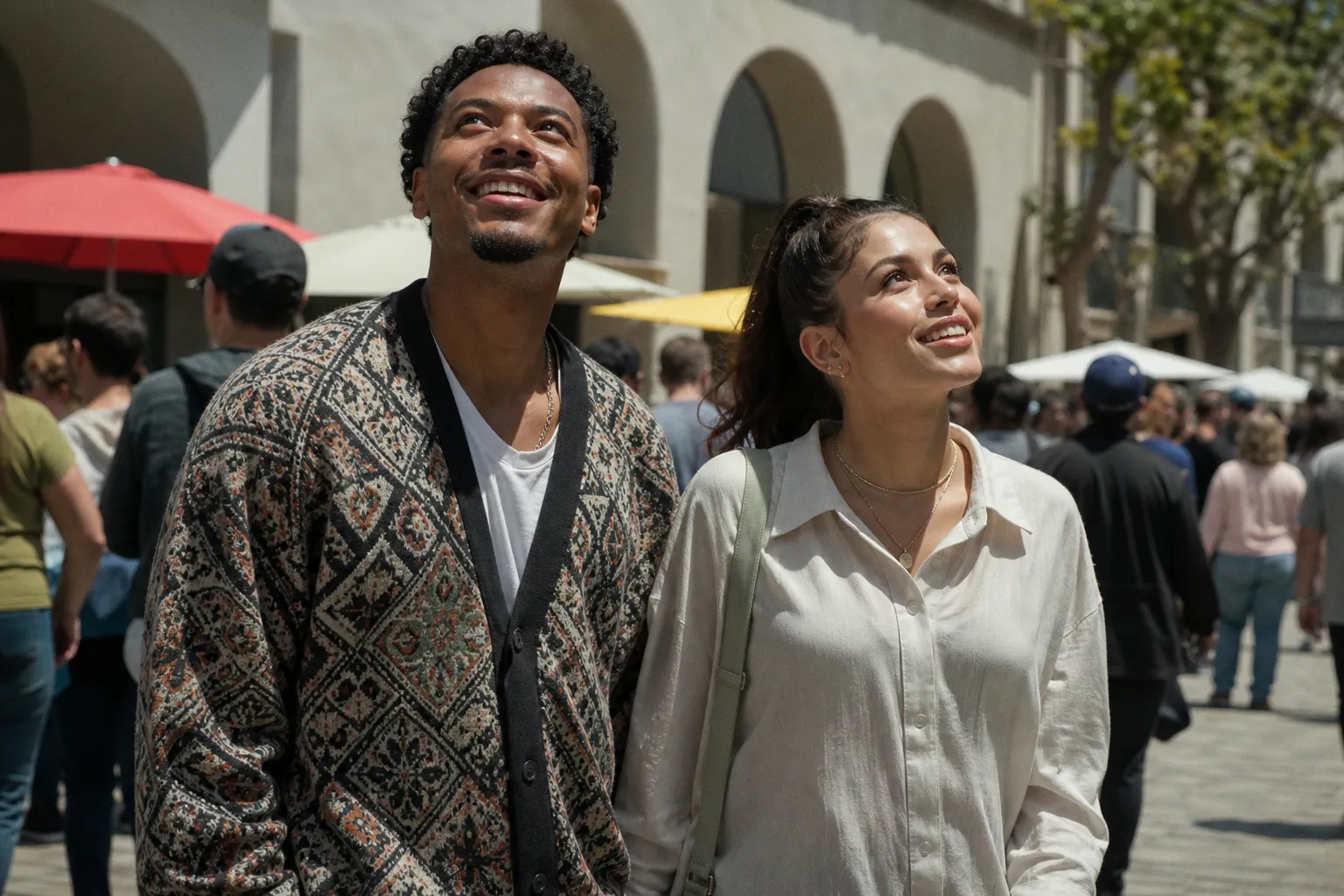
The Power Dynamics Behind Hollywood’s High-Profile Age-Gap Romances
According to a report headlined “Inside the Rise of Hollywood’s Wealthy, Aging Men Seeking Much Younger Partners,” the familiar age-gap romance is again being framed as a visible Hollywood pattern rather than a one-off tabloid curiosity.

That distinction matters: when celebrity couples become shorthand for an entire cultural debate, the public narrative can flatten two real people into an easy headline. For viewers, the useful question is not whether an age difference is automatically romantic or automatically suspect—it is what the relationship’s public optics ask us to overlook.
The headline is about power, not just birthdays
“Much younger” is an intentionally loaded phrase because age is rarely the only variable in a celebrity relationship. Wealth, career longevity, name recognition and access all shape the balance of power around a couple long before they pose for a photograph together.
That does not mean every relationship with an age gap follows the same script. It does mean fans should resist the Hollywood habit of treating a glamorous appearance, a vacation photo or a coordinated red-carpet moment as evidence that all boundaries are healthy and all dynamics are equal.
If the coverage focuses only on the man’s status and the woman’s youth, then the narrative control is already uneven. The more revealing detail is whether both partners are allowed to be full people in the story—with careers, agency and a voice beyond their pairing.
Why the optics keep landing differently
Hollywood sells reinvention especially well. A new relationship can arrive as a fresh chapter after a separation, a career pivot or an unflattering news cycle; the public often reads it as proof of resilience. But a polished restart is not the same thing as emotional resolution, and audiences do not need to pretend otherwise.
The report’s framing also points to a wider tension in celebrity culture: aging is often treated differently depending on who is doing it. A famous older man dating a younger partner may be positioned as desirable, powerful or newly energized. The younger woman, meanwhile, can be reduced to an accessory, a mystery or a motive. Neither label is particularly fair, and both can obscure the actual relationship.
That is why “they look happy” is a weak metric for readers assessing the spectacle. Public happiness is a presentation, not an audit of private compatibility. The same is true in reverse: outside skepticism alone cannot tell us what a couple’s life is really like.
A more useful way to read the next headline
The practical verdict is simple: judge the coverage before judging the couple. Watch for reporting that turns an age gap into a punchline, assumes ulterior motives, or grants one partner all the narrative authority. Those are signs of a story built for reaction rather than insight.
If a relationship is being presented as a bold new romance, then it is worth asking whose image benefits from that framing—and whether both people receive equal dignity within it. If the answer is unclear, restraint is the smarter audience response.
Hollywood will keep packaging romance as a brand refresh. The healthier takeaway is to leave room for private complexity, while staying alert to the power and optics that fame can make easy to disguise.