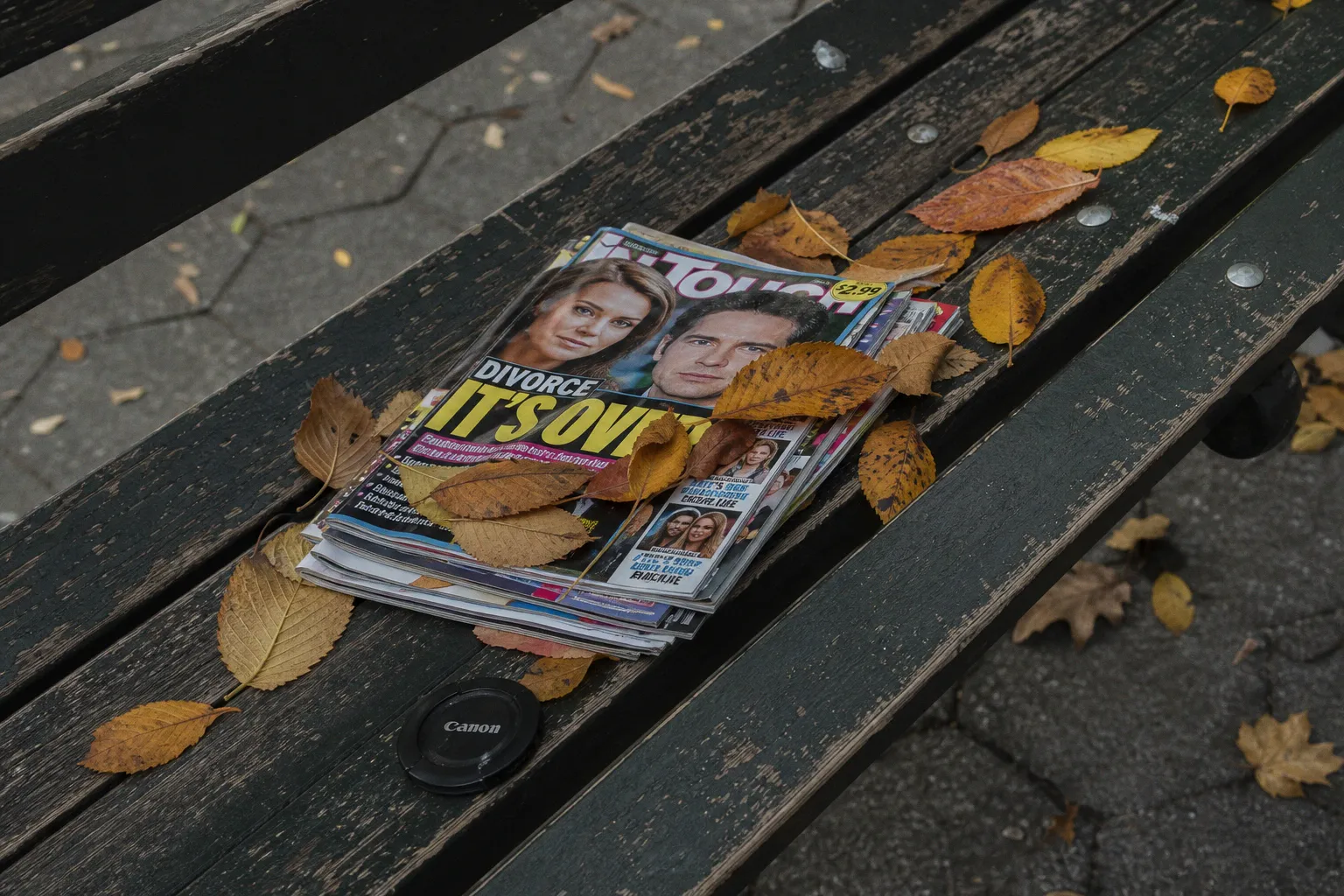
What are blind items and which gossip sources are credible

What Are Blind Items and Which Gossip Sources Are Credible?
A celebrity breakup goes quiet for two weeks, then an Instagram account posts that “a beloved awards-season couple” is living separately, negotiating “optics,” and has told friends the relationship was “more business than romance.” Within hours, fans have named three couples, picked apart old red-carpet photos, and turned a deliberately vague post into a verdict.
That is how blind items work at their most efficient: a little context, a few emotionally loaded clues, no name attached, and an audience willing to complete the story. The format can be entertaining. It can also be exceptionally bad at distinguishing a real insider observation from a rumor that simply fits the moment.
So, what are blind items? They are gossip items that imply a celebrity’s identity through clues while withholding the person’s name. They are not verification. And the more personal the alleged claim—relationships, health, sobriety, family conflict, private behavior—the more distance a reader should keep between a blind item and a belief.
A blind item can be a conversation starter. It is not a substitute for evidence.
The evolution of blind items: from society columns to Instagram Stories
Blind items did not begin with celebrity fan accounts or anonymous tip boxes. The format has roots in Gilded Age gossip columns, where writers could allude to socially prominent people without printing names outright. The point was part discretion, part sport: readers were invited to recognize the subject from the details.
The format returned in a big way through celebrity and city-gossip columns in the 1990s, including the kind of coverage associated with Page Six and the Village Voice. In that era, blind items often traveled through a smaller media ecosystem. A rumor might begin with a columnist, move through industry chatter, and then become a dinner-party question before it ever reached a mass audience.
Instagram changed the speed and scale, not the underlying mechanism. A modern account can post a reader submission, describe a “streaming star,” a “recently separated singer,” or an “A-list actor with a carefully managed image,” and reach hundreds of thousands of people before anyone has asked the most basic question: who actually knows this?
By 2022, the Los Angeles Times reported that Deuxmoi had grown past one million followers, fueled by reader-submitted celebrity chatter. That scale explains the appeal. Fans get the feeling of being backstage, close to an unfiltered version of Hollywood. But anonymous submissions create a very specific limitation: the audience does not know the sender, and often neither does the public account in any meaningful, verifiable way.
That does not mean every submission is invented. It means the audience has no reliable basis for knowing which ones are grounded, exaggerated, secondhand, planted, misread, or entirely fabricated.
Celebrity blind items explained: clues are not confirmation
The defining feature of a blind item is not merely anonymity. It is the combination of anonymity and identification-by-hint.
A named rumor might say that a particular actor is reportedly leaving a show, while keeping the source unnamed. A blind item goes one layer further: it withholds the actor’s name but offers clues designed to point readers toward one. Those clues can include career milestones, relationship timelines, geography, public persona, awards, recent appearances, or supposed private habits.
That distinction matters because blind item terminology often gets muddled online. “Anonymous source,” “leak,” “tip,” “blind,” and “insider report” are treated as interchangeable. They are not.
| Format | What the audience is told | What it can establish on its own |
|---|---|---|
| Blind item | Contextual clues, but no subject named | Very little; the clues invite guesses rather than prove identity |
| Anonymous tip | A claim from an unidentified sender, sometimes naming a celebrity | Nothing without evidence or independent reporting |
| Reported story using anonymous sourcing | A named outlet and reporter explain a claim, with sourcing standards behind it | Potentially meaningful, if the sourcing is specific, vetted, and corroborated |
| Direct evidence | Documents, on-record statements, original video, court filings, or clearly authenticated material | Stronger footing, though context and authenticity still matter |
The gap between the second and third rows is where a lot of celebrity gossip gets slippery. A social-media account may call a post “from a source.” A news organization using an anonymous source is supposed to know who that source is, assess their direct knowledge, and decide whether the information can be independently confirmed.
Those are not comparable processes.
The Associated Press’s current standards are a useful reality check here. Anonymous-source material must be factual rather than speculative, necessary to the story, unavailable through other means, and provided by a reliable person with direct knowledge. The source’s identity must be known and vetted inside the newsroom. Reports built on anonymous claims from other outlets receive additional scrutiny, not automatic amplification.
That is a high bar. A follower DM is not required to clear it.
The journalism gap: why an Instagram “insider” is not the same as a source
The seductive part of a blind item is that it feels unusually intimate. It may mention the exact emotional language fans have been waiting to hear: “boundaries,” “separate lives,” “image management,” “a strategic reconciliation.” It can sound like the message came from a publicist, an assistant, a stylist, or a friend who was there.
But specificity is not proof. In celebrity culture, specificity can be reverse-engineered from public information surprisingly easily.
If a couple has not appeared together recently, has skipped each other’s premieres, or has stopped posting anniversaries, a rumor writer has enough material to build a plausible narrative. They do not need access to the relationship. They need a good memory, a sense of timing, and a willingness to write in a tone that sounds confidential.
The emotional stakes get higher when a blind item concerns a split. A quiet breakup can be a genuine attempt at privacy. It can be a legal necessity while contracts, housing, children, or business arrangements are being handled. It can be a boundary between two people who do not want their grief turned into public entertainment.
If the couple later issues a short, coordinated statement, that does not automatically prove the relationship was “PR.” It often means both parties understand narrative control. In Hollywood, that can be practical rather than manipulative: one agreed line prevents staff, friends, family members, and fan communities from being drawn into a public autopsy.
If a blind item claims a couple is “faking it,” then the burden should sit with the claim—not with the couple to disprove an anonymous post. If the item only mirrors what fans have already noticed, then it may be commentary wearing the costume of access.
The more a rumor asks you to infer someone’s private pain, the less acceptable it is to treat inference as insight.
How to evaluate gossip beyond the hype
There is no universal list of reliable gossip sources. That is the inconvenient but useful answer. An entertainment outlet can be careful on one story and thin on another. A gossip account can occasionally receive a real tip while still having no process for separating fact from fantasy.
The smarter approach is to assess the individual claim.
Here is the practical filter I use when a blind item begins moving fast:
1. Separate the original claim from the fan interpretation.
Read the item itself, not just a repost that says, “This is obviously about X.” A blind item may contain only a generic clue. The certainty often arrives later, built by commenters connecting dots that were never actually established.
2. Ask what evidence is visible.
“I saw them,” “my friend works with them,” and “everyone knows” are not evidence. A credible report may not reveal every detail, but it should show its work in some form: a named reporter, a specific claim, direct records, an on-the-record quote, verified imagery with context, or clear attribution.
3. Look for independent corroboration—not repetition.
Ten accounts repeating the same screenshot are one unverified claim wearing ten different outfits. Corroboration means separate reporting, separate evidence, or a direct confirmation that does not trace back to the same anonymous post.
4. Check whether the story has a real opportunity for response.
Did the reporter seek comment from representatives or the people involved? A celebrity declining to comment does not make a rumor true. But asking is part of the discipline. It signals that the outlet is testing the claim rather than simply publishing it.
5. Watch the language.
“May,” “reportedly,” and “according to” can be appropriate qualifiers, but they do not transform unsupported material into reporting. Conversely, an account that states a private allegation as flat fact without showing a source trail is telling you something about its standards.
6. Inspect the corrections culture.
Every outlet gets things wrong. The question is what happens next. A credible publisher visibly labels factual corrections. It does not quietly edit a post, call a mistake a vague “clarification,” or leave the original false framing intact while moving on to the next rumor.
7. Match the claim to its potential harm.
A blind about a possible casting decision deserves a different level of concern than one alleging infidelity, addiction, a health condition, abuse, or a child-related conflict. The more damaging the claim, the stronger the evidence should be before anyone repeats it—even with a winking “allegedly.”
This is not about draining the fun from gossip. It is about knowing when the entertainment is harmless speculation and when it begins to borrow credibility from real people’s lives without earning it.
Why fan guesses are the weakest link in the chain
Fan communities are remarkably skilled at pattern recognition. They spot a missing ring, a changed lyric, an unfollow, a canceled appearance, a publicist’s oddly timed statement. Sometimes they correctly identify a relationship shift before it is acknowledged publicly.
But being occasionally right is not the same as having evidence.
A fan theory often works backwards. The community starts with the celebrity it suspects, then reinterprets every clue to fit that person. A line about a “recently divorced pop star” becomes definitive because one singer’s divorce was high-profile. A reference to “a prestige actor with a franchise past” suddenly narrows to a single name, even though it could apply to dozens of people.
This is confirmation bias with excellent photo archives.
It is also worth noticing how quickly a theory can alter the public dynamic around a couple. When fans decide that one partner is the villain, every old interview becomes evidence of control, every solo outing becomes proof of estrangement, and every neutral statement becomes a coded message. The people involved may be navigating a normal transition—distance, scheduling, a breakup, reconciliation, grief—while the internet assigns motives with the confidence of a deposition.
For relationship rumors, the most responsible reading is often the least dramatic one: public behavior shows public behavior. It does not reveal the private terms of a partnership.
If a couple has not confirmed a split, then they have not confirmed a split. If they do confirm it later, that does not retroactively validate every blind item written along the way. A correct conclusion can still come from an unreliable process.
The relationship-PR angle: not every controlled narrative is a cover-up
Hollywood relationships are evaluated through optics whether the people involved invite that attention or not. A joint red-carpet appearance can be read as a recommitment. Separate arrivals can launch breakup speculation. A birthday post can become a referendum on affection. Silence becomes a statement because audiences have been trained to read it that way.
That pressure is why relationship teams often choose a deliberate communications strategy.
If a couple expects a breakup announcement to affect an album rollout, film campaign, custody conversation, or brand partnership, then a brief shared statement can protect both people from a more chaotic story cycle. If they need time before saying anything, then silence may preserve boundaries. If they appear together after rumors begin, that may reflect a genuine attempt to remain civil—not necessarily a contract, a stunt, or proof that the rumors were wrong.
The point is not that public relations is irrelevant. PR absolutely shapes what reaches the public. The point is that PR strategy does not erase human reality. Two things can be true at once: a celebrity team can manage optics, and the people at the center can still be working through a difficult, private decision.
Blind items thrive by pretending there is only one explanation. Good judgment makes room for several.
The verdict: treat blind items as a genre, not a reporting category
Blind items are a longstanding gossip format built around implication. They can be clever, nostalgic, and occasionally connected to real industry chatter. But the format itself does not verify identity, motive, or truth.
The credible version of celebrity reporting is less glamorous than the viral version. It has a byline. It distinguishes fact from interpretation. It tells readers what is known, what is alleged, and what remains unconfirmed. It seeks comment, corroborates material independently, and corrects errors where readers can see them.
That is not a promise that every reported entertainment story will be perfect. It is a better system than asking anonymous clues to carry the weight of a private accusation.
For fans, the most balanced posture is simple: enjoy the puzzle if you want, but do not confuse solving it with knowing the people inside it. If a rumor is real, it can withstand time, reporting, and evidence. If it cannot, no amount of matching clues should turn it into truth.
And for the celebrities caught in the middle, that distinction is more than media literacy. It is the difference between a public narrative and a public pile-on.