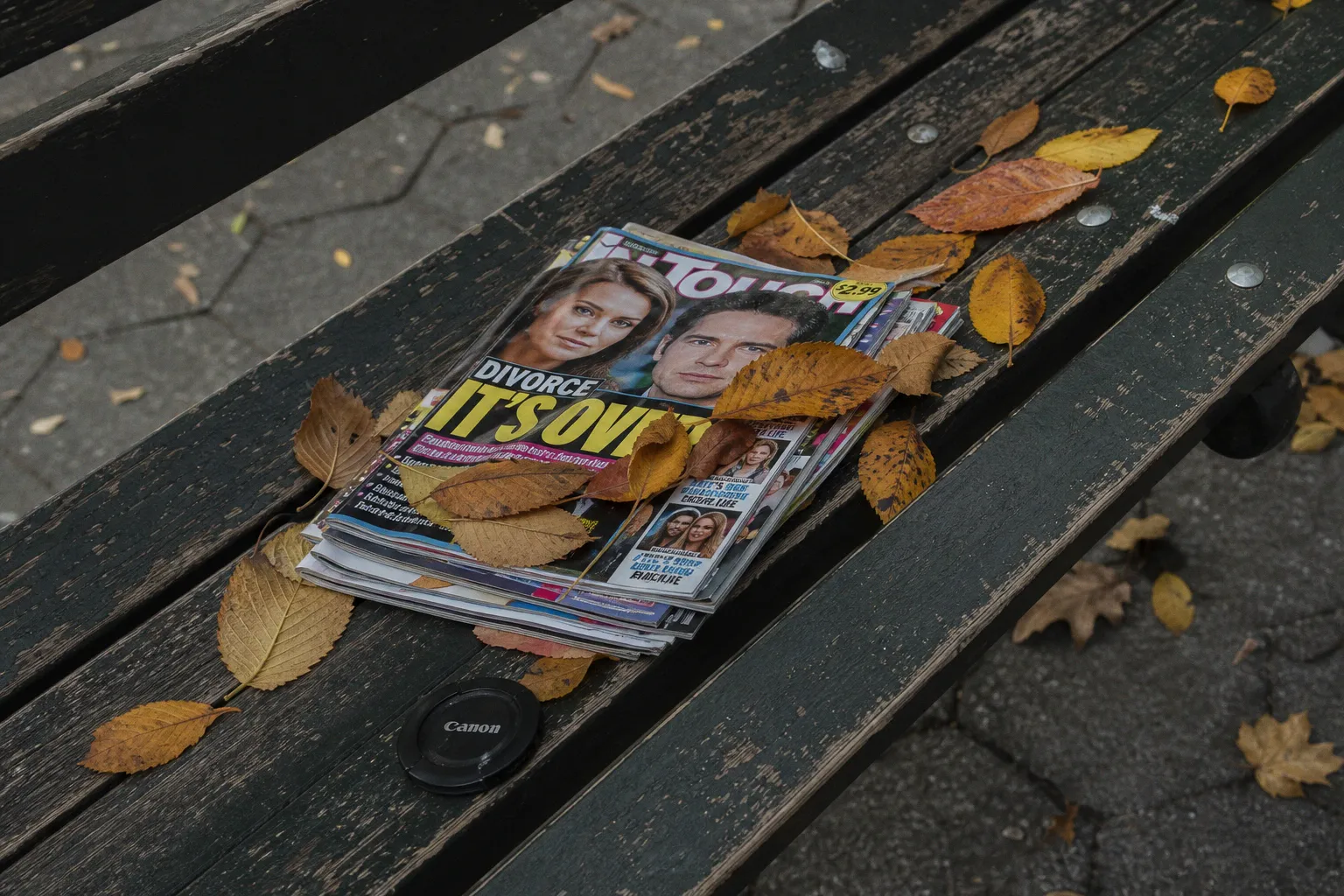
Blind items meaning: three gossip tiers compared by clarity
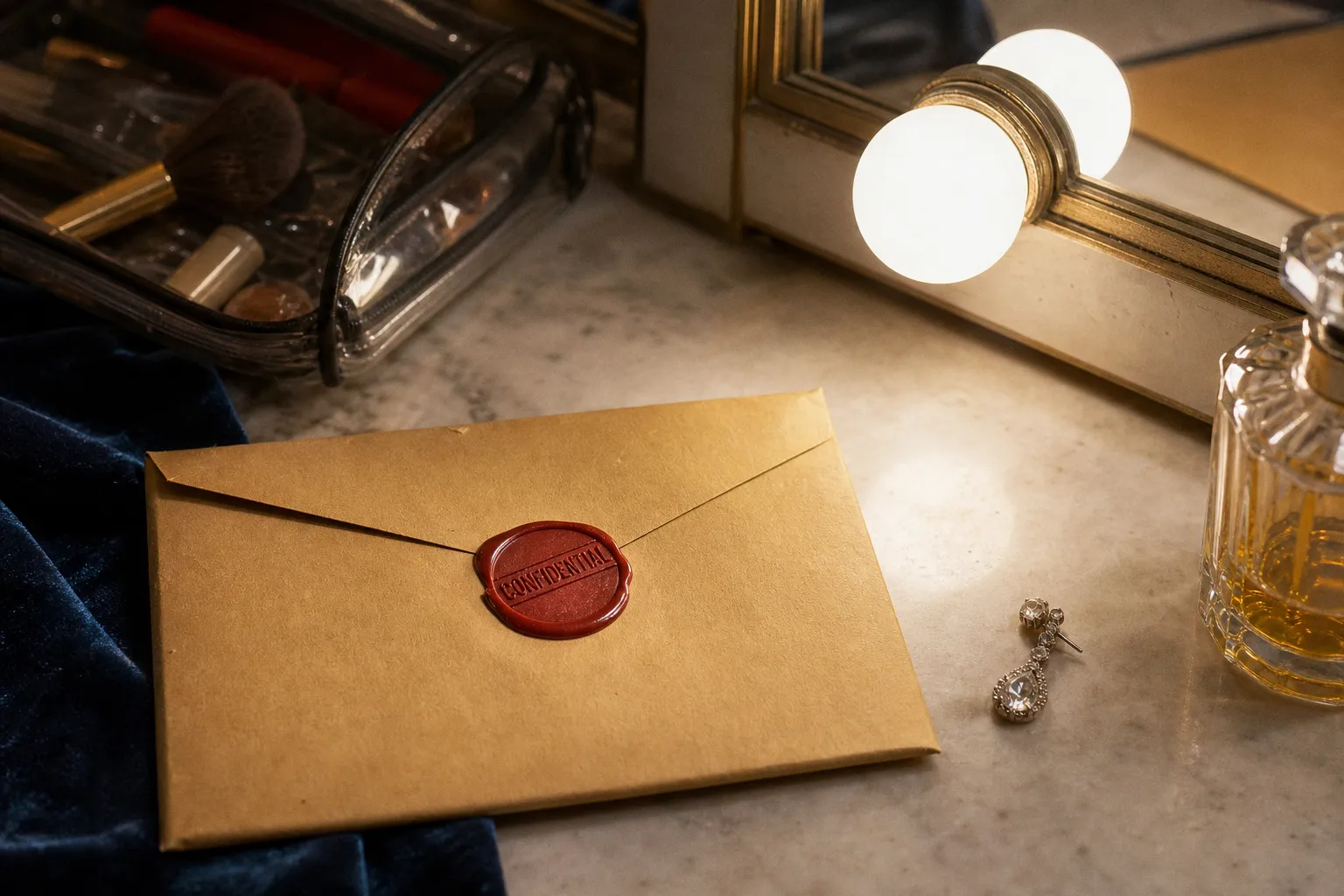
A blind item is not simply gossip with the names removed. It is a deliberately structured form of insinuation: an alleged event is paired with enough contextual detail—career stage, relationship status, a recent premiere, a designer, a city, a familiar professional habit—to make recognition feel available without ever becoming reportable fact.
That distinction has been blurred by the digital gossip economy. A conventional blind, a post sourced to an unnamed tipster, and a social-media “reveal” are now regularly collapsed into one category of alleged insider knowledge. They are not the same object. They differ in what they conceal, what they assert, and how much confidence a reader can reasonably assign to the story.
The practical meaning of blind items, then, lies less in their salaciousness than in their degree of clarity. The following three-tier scale is not an industry standard; it is a useful editorial instrument for separating a genuinely anonymous rumor from a clue-heavy near-identification and a named allegation that still lacks verification.
A blind item is designed to invite recognition, not to provide proof.
From Gilded Age insinuation to the permanently refreshed feed
Blind items did not arrive with celebrity Instagram accounts or anonymous gossip pages. The form has roots in Gilded Age society columns, where status itself made partial description a sufficient naming device. In a tightly observed social world, “the young heir with the summer house at Newport” could be both technically unnamed and perfectly legible to the intended audience.
The format returned with particular force in the 1990s, when celebrity columns—including the increasingly influential Page Six model and the Village Voice’s sharper downtown sensibility—treated omission as part of the entertainment. The missing name was not a flaw in the copy. It was the mechanism. Readers were asked to complete the silhouette.
That history matters because today’s online versions often mistake volume for provenance. An item is repeated across ten accounts, rendered into a TikTok slideshow, paired with paparazzi photographs, then treated as though its circulation had transformed it into reporting. It has not. Repetition can make a rumor culturally dominant; it cannot make the originating claim demonstrable.
Modern celebrity gossip also moves more quickly than the old column format ever did. A 1990s item might have remained suspended in the public imagination for weeks. Now a cryptic post can be “decoded” within minutes by fan accounts comparing tour schedules, recent red-carpet appearances, archived captions, restaurant sightings, lyric fragments, and the photographed placement of a ring. The technical anonymity survives; the social anonymity often does not.
This is precisely why the terminology needs discipline. “Anonymous subject” and “anonymous source” describe two entirely different absences. A blind item withholds the alleged subject’s identity. A named gossip post may identify its celebrity subject while relying on an unnamed sender. The latter can look more transparent, but its evidentiary footing may be no firmer.
The three tiers: what each format actually tells you
The useful comparison is not between “real” gossip and “fake” gossip. Rumor does not become a verified fact merely because it is elegantly written, widely believed, or later repeated by a better-dressed account. The more honest comparison asks what the item makes available to the reader, and what it strategically leaves unresolved.
| Parameter | Tier 1: Fully blind | Tier 2: Not-so-blind | Tier 3: Named but unverified |
|---|---|---|---|
| Celebrity subject named? | No | No, formally | Yes |
| Clues supplied | General or moderately specific | Dense, highly identifiable | Often secondary to the claim |
| Source named? | Usually no | Usually no | Usually no |
| Reader’s role | Interpret clues cautiously | Recognize the likely target | Assess a direct allegation |
| Main risk of misreading | Treating speculation as identification | Treating obvious clues as confirmation | Treating a name as verification |
| Relationship to conventional blind-item form | Closest fit | Informal, clue-heavy variation | Not technically a blind item |
The scale is about clarity, not truthfulness. A fully blind item can be maliciously invented. A named anonymous tip can be accurate. Neither format supplies independent verification by itself.
Tier 1: The fully blind item and its deliberately unfinished silhouette
The fully blind is the closest thing to the classic form. It describes an alleged episode but does not name the celebrity or offer a combination of clues so narrow that the subject becomes unmistakable.
Its architecture tends to be deceptively simple:
- a professional category: actor, singer, reality figure, athlete, producer;
- a contextual setting: an awards dinner, a hotel lobby, a campaign shoot, a private after-party;
- an insinuated action: a dispute, a reconciliation, an unusual expense, an alleged romantic arrangement;
- one or two atmospheric details intended to suggest access without supplying evidence.
The elegant version of this form understands restraint. It may say that an “award-season regular” had a conspicuously tense dinner with a former collaborator, but it does not attach the allegation to a recent nomination, an exact restaurant, a distinctive wardrobe detail, and a known breakup timeline all at once. Once the clues become that precise, the item has moved into another category.
The fully blind’s central limitation is often mistaken for a virtue: because the subject cannot be conclusively identified from the text alone, the reader is invited to supply an answer from memory and bias. This is where celebrity blind items become unusually revealing about audience behavior. A reader who already dislikes a particular star sees confirmation. A reader devoted to that star sees a rival fandom’s fabrication. Neither response establishes the premise.
The strongest way to read Tier 1 is to retain the wording exactly as it is: an unnamed rumor about an unspecified subject. Do not promote a guessed identity to the grammatical center of the story. The gap is the point.
The more eagerly a blind seems to name someone in the reader’s mind, the less carefully that reader is likely to examine its actual claim.
Tier 2: The “not-so-blind” item and the thin veil of anonymity
“Not-so-blind” is an informal term, not a formal trade classification, but it is indispensable because it describes the dominant contemporary variation. The celebrity is technically unnamed. In practice, the clues have been arranged with the conspicuous precision of a couture fitting: a recent franchise exit, a much-discussed relationship chronology, an exact career detour, a recognizable public feud, perhaps a reference to a look worn during a specific press cycle.
The effect is not anonymity so much as deniability.
A not-so-blind item may be framed as a puzzle, but its clues frequently function as a narrow corridor with only one intended door. Entertainment coverage has used the phrase for blinds deemed especially easy to solve, sometimes with an originating outlet promising a later answer. That structure—tease, crowdsource, reveal—has become a reliable traffic machine because it recruits the audience into the production of the allegation.
There are three visual and rhetorical signals that a blind has entered this second tier:
1. The clues form a unique profile rather than a broad category. “A streaming-series lead” is broad. “A streaming-series lead who recently left a long-running franchise after a public dispute with a co-star and has an album due this spring” is not.
2. The item borrows details from public-facing image management. References to a particular awards-season gown, a promotional tour, a carefully documented vacation, or a recent beauty campaign create a sense of documentary authority. Yet a recognizable emerald column gown or a photographed exit from a hotel proves only that the celebrity wore the gown or left the hotel.
3. The alleged event is more serious than the evidence supporting it. The reader gets the specificity of a private claim without the reporting apparatus that a serious allegation would require: named witnesses, documents, on-the-record response, or independently corroborated chronology.
The not-so-blind is seductive because it offers the aesthetic of insider access. It has the shape of a story already in progress, with a cast that seems visible through gauze. But gauze is still a covering. The format asks readers to mistake a successfully decoded reference for a substantiated accusation.
The responsible editorial approach is not to pretend the clues do not point toward a public figure. It is to describe the situation accurately: the item appears designed to evoke a particular celebrity, but it does not establish that the celebrity is the subject or that the underlying allegation occurred.
That wording may feel less thrilling. It is also the difference between covering a rumor and laundering it.
Tier 3: Named but unverified gossip is not a blind item
The third tier is clearer in one respect and murkier in another. Here, the celebrity is named outright, while the source remains unnamed: “an insider,” “a friend,” “someone close to production,” “a person who attended the event,” or the ubiquitous “source.”
This is not a blind item in the conventional sense. The subject is no longer anonymous. The uncertainty has migrated to the origin of the claim.
The distinction appears technical until one sees how frequently it is lost in coverage. A post that says an unnamed source claims that a named actor is feuding with a named director may be circulated under the broad label of “blind-item tea.” But it asks the reader to make a different judgment. There is no puzzle to solve. There is simply an allegation whose sourcing cannot be evaluated from the post itself.
The critical questions shift accordingly:
- Is the source’s relationship to the information described with any usable precision, or merely decorated with proximity language?
- Does the claim concern a matter that could be independently corroborated through public records, official representatives, production documentation, or direct participants?
- Has the celebrity or representative been given a meaningful opportunity to respond?
- Is the account reporting original information, or aggregating an earlier anonymous post that has already lost its provenance?
- Does the claim arrive alongside material that has been independently established, creating a borrowed aura of reliability?
The phrase “anonymous source” can sound like journalistic vocabulary, but vocabulary is not method. Responsible reporting does sometimes depend on confidential sourcing; the difference is that a credible publication has internal standards for assessing the source’s access, motive, reliability, and the possibility of corroboration. A screenshot that invokes “a source” does not disclose whether any of that work occurred.
The named-but-unverified category has a particular advantage in the social-media marketplace: audiences tend to believe that explicit naming equals editorial confidence. In fact, it may only mean the account has decided to be more direct. The assertion has become sharper; the proof has not necessarily improved.
How blind items work: clues, provenance, and the illusion of accumulation
The mechanics of blind items are not mysterious. They depend on controlled insufficiency. Give the audience enough information to identify a plausible target, but not enough to test the allegation. The reader’s prior knowledge completes the narrative, and the resulting feeling of participation can be mistaken for discovery.
A high-functioning blind typically combines four elements:
1. A recognizable professional silhouette. This could be a career trajectory, a franchise association, a public relationship, or a signature role. It establishes the field of possible subjects.
2. A timely peg. An awards appearance, a divorce filing, a casting announcement, a tour, a fashion launch, or a reality-show reunion gives the item a place in the news cycle. Timing creates plausibility, though it is not evidence.
3. A private allegation. The most marketable claims involve conduct that cannot readily be observed: a secret conflict, an alleged contractual demand, an undisclosed relationship, a backstage betrayal.
4. A clue that feels intimate. A food order, a car service, a luxury hotel, a beauty treatment, a reference to a particular designer, or a private nickname. Such details create texture. They are not, by themselves, provenance.
The last point deserves emphasis. Gossip accounts often use granular details as though detail were a substitute for corroboration. It is not. A fabricated story can contain precise details; indeed, precision is often what makes fabrication persuasive. The presence of a luxury label, a specific neighborhood, or a description of a bias-cut dress does not authenticate an allegation any more than an accurate red-carpet caption authenticates a private conversation.
This is also why paparazzi photographs are so routinely overread. A photograph can establish that a person entered a venue, exited a car, wore a certain silhouette, or occupied a public space at a given time. It usually cannot establish the content of a private meeting, the emotional temperature of a relationship, or the motivations behind a career decision. Image evidence has boundaries, and celebrity gossip depends on readers forgetting where those boundaries sit.
A practical reading order for rumor-heavy posts
For readers decoding celebrity gossip without converting it into fact, sequence matters more than intuition.
1. Identify the format before attempting the identity. Ask whether the post is a fully blind item, a not-so-blind construction, or named gossip from an anonymous source. The answer determines what the post actually claims.
2. Separate visible facts from narrative additions. A public appearance, a deleted post, or a photographed interaction may be real. The interpretation layered onto it may be entirely speculative.
3. Trace the earliest available version. The tenth repost is not ten sources. It may be one unsourced sentence copied through nine accounts, with each repetition obscuring where it began.
4. Treat consensus as a social fact, not an evidentiary one. If fan communities agree on a target, that tells you how legible the clues are. It does not establish that their answer is correct.
5. Preserve uncertainty in the language. “Appears to reference,” “is widely speculated to concern,” and “remains unverified” are not ornamental hedges. They describe the actual status of the claim.
The value of this method is not prudishness. It is accuracy. Celebrity culture produces enough documented material—interviews, court records, official announcements, credits, public appearances, direct statements—that there is no need to inflate an unverified item merely because its clues are chicly arranged.
The reveal: a later name changes the format, not the evidence
A reveal is a later update that attaches names to people who were anonymous in the original item. It may appear days later, months later, or after a cultural moment has shifted enough to make the identity feel obvious. The reveal has an irresistible narrative logic: the curtain is lifted, therefore the earlier rumor must have been true.
That conclusion is unwarranted.
A reveal changes the format from an anonymous insinuation into a named allegation. It does not retroactively provide corroboration. The reader should ask exactly the same questions that apply to Tier 3: who is making the identification, what evidence supports it, whether the original item was sufficiently specific to make the later answer meaningful, and whether the supposed revelation could have been supplied after public events made one interpretation convenient.
There is also a common archival problem. Once a reveal circulates, the original blind is often rewritten in retrospect. Clues that were broad begin to seem exact. Ambiguous phrasing acquires a single obvious meaning. A publication date vanishes from screenshots. Details that appeared in later fan theories are silently folded back into the alleged original. This is less investigation than editorial embroidery.
The chronology matters. If an item appeared before a public development and accurately anticipated a specific, independently confirmed event, that may make it more interesting. It still does not prove access, motive, or the truth of every adjoining allegation. If the item emerged after the relevant public information was available, its apparent prescience may be no more than a clever rearrangement of existing facts.
A reveal should therefore be read as an escalation in reputational consequence, not an elevation in factual status.
Naming the subject concludes the guessing game; it does not conclude the reporting.
Why the distinction has cultural consequences
The language around blind items can appear fussy until one considers what is at stake. A vague item about “a television favorite” can become, through collective online decoding, a durable association with addiction, infidelity, financial misconduct, coercive behavior, or professional sabotage. The original poster may have withheld a name. The audience supplies one anyway, then treats the crowd’s inference as immunity from responsibility.
The form’s old social function was to make elite behavior discussable without direct confrontation. Its contemporary function is more diffuse. It can be a pressure valve for industry resentments, a fandom weapon, an account-growth strategy, a test balloon for a publicist’s preferred narrative, or simply fiction dressed in the narrow tailoring of inside information.
None of those possibilities is reliably detectable from the prose of the item itself. The polished blind is not necessarily truer than the sloppy one. The vague item is not necessarily safer. The clue-heavy post is not necessarily sourced. And a later reveal is not necessarily a revelation.
For readers, the most durable standard is almost unfashionably plain: classify the claim before reacting to it. A fully blind item is an unnamed rumor. A not-so-blind item is an unnamed rumor engineered to be decoded. Named gossip from an anonymous source is a direct but unverified allegation. Those categories may overlap in tone, but they should never be allowed to overlap in certainty.
The blind item will survive because Hollywood remains an industry built on controlled visibility: every premiere, split, casting rumor, archival photograph, and strategically vague caption supplies material for speculation. Its cultural longevity is secure. Its authority is not.