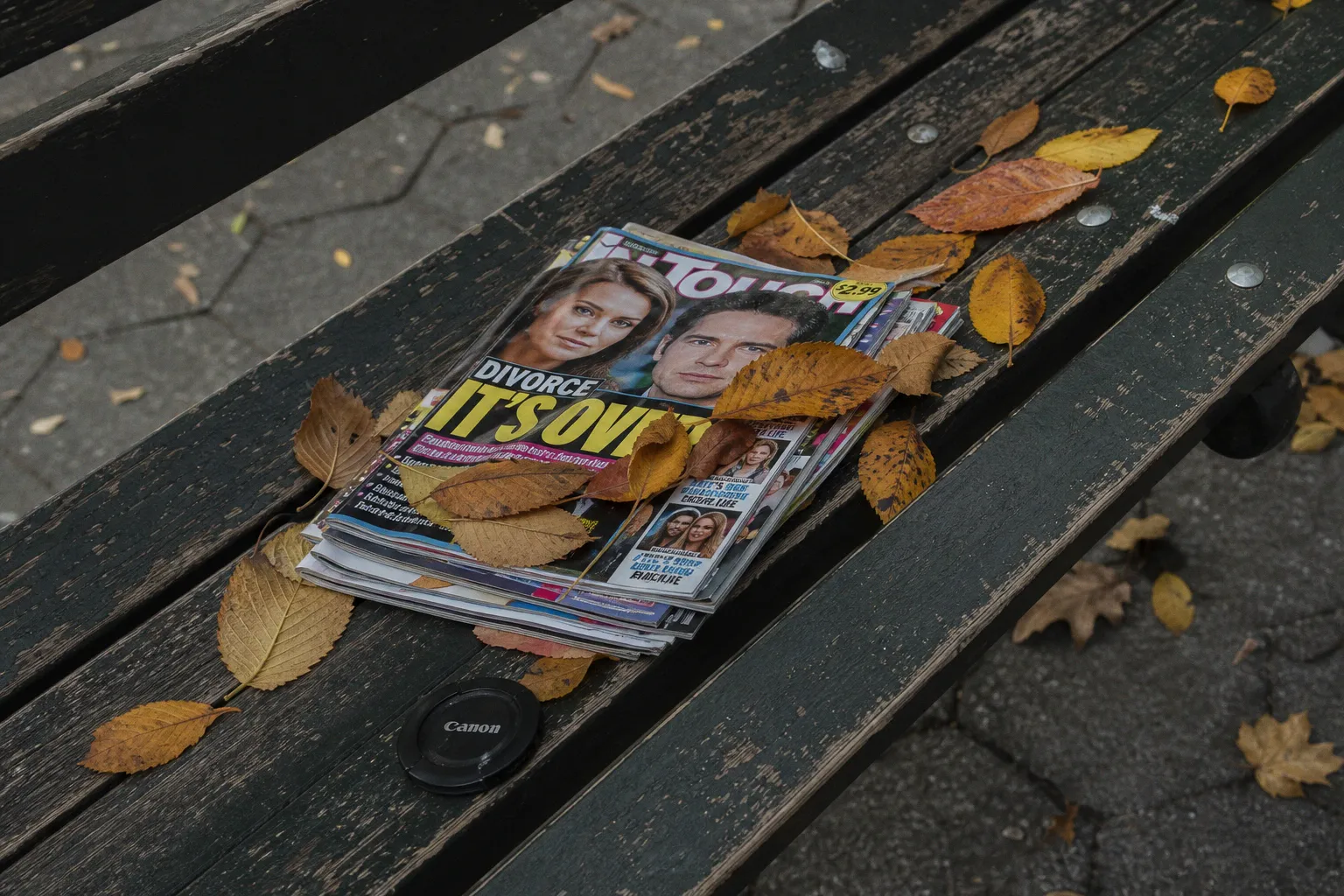
Celebrity blind items: what our accuracy test revealed
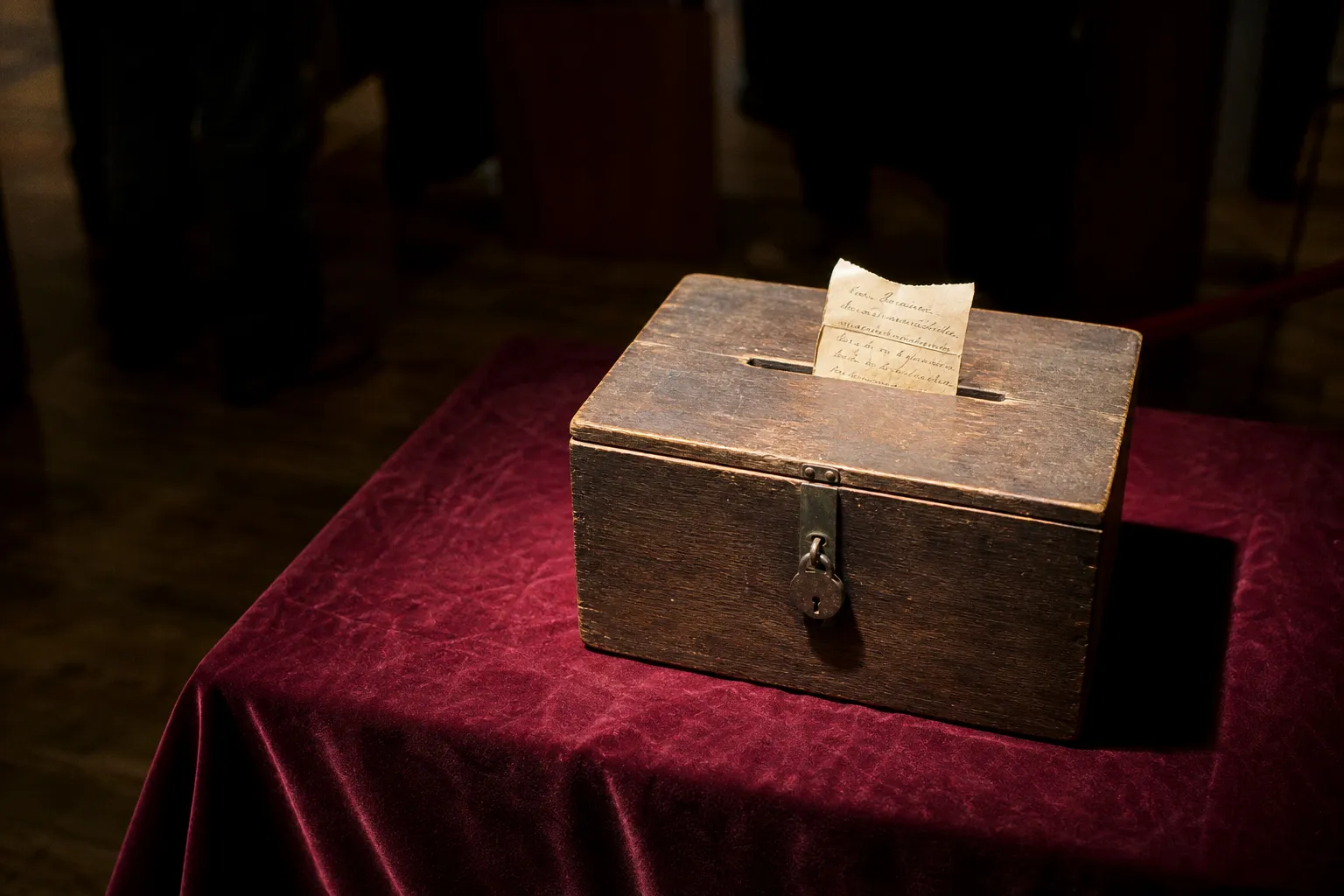
That difference matters because blind items now move faster than the old gossip ecosystem ever did. A cryptic post lands on Instagram, gets decoded on TikTok, mutates on Reddit, and by dinner it has become “everyone knows.” But when we tested a group of Hollywood blind items against later public outcomes, corroborating reports, timeline consistency, and basic plausibility, the pattern was less glamorous and more useful: blinds can be early signals, but they are terrible evidence.
A blind item is not a receipt. At best, it is a smoke alarm — sometimes detecting fire, sometimes reacting to burnt toast.
From Town Topics to digital riddles: anonymity was always the product
Blind items did not begin with Instagram story screenshots or anonymous “my friend works at Soho House” submissions. The format goes back to the early 19th century, and William d’Alton Mann’s Town Topics in New York is often credited as one of the genre’s early engines. The basic bargain was already there: say enough for insiders to feel clever, withhold enough to avoid direct accountability.
That old structure still defines modern celebrity blind items. The names disappear, but the clues do the heavy lifting: “foreign-born A-list singer,” “former franchise actor,” “nepo baby with a skincare contract,” “network reality husband.” The language creates two audiences at once. Casual readers get the thrill of mystery. Highly online fans get the deeper thrill of “solving” it.
The modern shift is scale. A gossip column once had editors, print deadlines, lawyers, and a slower feedback loop. Now a blind can be user-submitted, reposted with a shrug, screenshotted without context, and preserved forever. Platforms like Deuxmoi and Crazy Days and Nights became known for publishing tips that are not rigorously fact-checked in the way a newsroom would define that phrase. That does not mean every item is false. It means the format is structurally friendly to everything: real leaks, half-true leaks, fan fiction, planted PR, grudges, wishful thinking, and occasional genuinely useful early smoke.
Our test treated that mix as the starting point, not an inconvenience. Instead of asking, “Was this blind juicy?” we asked four more boring but more revealing questions:
1. Did the item make a claim specific enough to be tested later? “A couple is struggling” barely counts; most couples, celebrity or otherwise, struggle at some point. “They will announce a separation after awards season” is stronger.
2. Did the timing line up with public events? A blind posted before a verifiable shift — unfollows, property listings, absence from expected appearances, trade reporting — carries more weight than one posted after the internet has already noticed.
3. Was the language hedged beyond usefulness? The classic “could be,” “might be,” “people are saying” formula protects the poster but weakens the signal.
4. Did later reporting confirm the core claim, not just the general vibe? If a blind said “affair,” and the later confirmed story was “amicable breakup after long-distance strain,” that is not a hit. That is a lucky category guess.
That last distinction is where blind item accuracy often gets inflated by fandom. A relationship ends, and every prior blind about “trouble” is retroactively declared prophetic. But Hollywood relationships are public-facing businesses as well as private emotional systems. Absences, separate travel, quieter posting patterns, and guarded red carpet body language can be read by anyone paying attention. The blind does not necessarily prove insider access; sometimes it proves the poster noticed the same optics as everyone else and added fog.
The Enty Lawyer fallout changed the trust equation
For years, Crazy Days and Nights held a strange place in Hollywood gossip culture. It was treated by some readers as a chaotic archive of truths waiting to be revealed and by others as a factory of defamatory-sounding riddles. Its anonymous author, known as “Enty Lawyer,” became part of the mystique: supposedly plugged in, legally literate, and able to speak in coded form.
Then came the 2024 unmasking of John Nelson, the blogger behind CDAN, amid allegations of manipulation and abuse. The legal and personal dimensions of that fallout sit outside the neat little game of “which actor is this?” — and they should. But from an audience trust perspective, it was a major rupture. The anonymous narrator was no longer just a voice behind the curtain. The curtain itself became the story.
That matters because blind items depend on borrowed authority. If the reader believes the poster has industry access, the ambiguity feels sophisticated. If the reader doubts the poster’s ethics, access, or motives, the same ambiguity starts to look like evasion.
There is also a more uncomfortable point here: anonymous gossip brands are personality-driven even when they pretend not to be. Their authority rests on cadence, archive, tone, and reader memory. “They were right about X” becomes a credential, even if “they were wrong about A through W” is harder to track.
A famous example often cited by blind defenders is Caitlyn Jenner’s transition, reportedly discussed in blind items roughly two years before her public announcement. That kind of hit is why the format never fully loses its power. A correct early signal can live in collective memory for a decade. A hundred misses vanish into the scroll.
Here is the practical read: a blind account can be right before the mainstream press is ready or able to report. It can also be wrong in ways that harm real people. Both statements are true. The mature reader has to hold them together.
PR strategy or insider leak: the same format serves both
The most misunderstood part of Hollywood blind items is how useful they are to publicists. Readers often imagine blinds as leaks that embarrass PR teams. Sometimes they do. But just as often, the format gives the machine a low-risk testing ground.
If a celebrity couple is planning a breakup announcement, a vague blind about “separate lives” can soften the public mood. If a studio wants to see whether fans would accept two co-stars as a romantic pairing, a coy “new couple alert” item can gauge reaction without committing anyone to a hard launch. If a celebrity needs distance from a scandal, a blind can redirect attention toward someone else’s messier narrative.
This is not conspiracy thinking; it is basic narrative management. Hollywood runs on optics. The public version of a relationship is paced, edited, and timed around release calendars, custody considerations, brand deals, awards campaigns, and personal boundaries. A blind item lets a team float a storyline while preserving deniability.
The mechanics are similar to any operation that tests inputs before making a bigger move. Retail chains, for example, track operational signals before deciding what to change; that same discipline of reading small metrics before public action is why pieces on testing store operations efficiency feel oddly relevant to celebrity PR. Different industry, same principle: watch the signals, measure the response, adjust the rollout.
In relationship coverage, the pattern usually looks like this:
| Blind item pattern | What it may signal | What it does not prove |
|---|---|---|
| “They have been living separate lives” | A breakup announcement may be coming, or public schedules have diverged | That either person cheated, lied, or abandoned the relationship |
| “This new pairing is not as random as it looks” | A soft-launch may be underway, especially near a film or album cycle | That the romance is fake or contractual |
| “Friends are worried” | Someone close to the situation may be shaping sympathy | That the celebrity is in crisis |
| “A-list actor is difficult on set” | Negotiation pressure, reputation management, or a genuine workplace complaint | That every anonymous workplace story is accurate |
| “Former couple is friendlier than expected” | Co-parenting, franchise obligations, or reunion speculation being tested | That a romantic reunion is happening |
The point is not that every blind is PR. It is that blind items are useful because they are flexible. A real assistant, a bored party guest, a resentful ex-friend, and a publicist can all submit a sentence that looks the same once stripped of names.
That is why the smartest reading posture is not cynicism. It is containment. Let the blind sit in a mental holding room until something sturdier arrives.
The accuracy gap: why some predictions hit and others collapse
When readers ask whether celebrity blind items are “true,” they usually want a percentage. I understand the impulse. A number would feel clean. But across major blind platforms, there is no reliable public percentage of items that are eventually revealed as true. The archive is too messy, the claims are too elastic, and many “reveals” are themselves unverified.
So our accuracy test focused on categories of reliability rather than pretending to produce a universal score. The strongest blinds tended to share three traits: they were specific, time-bound, and later supported by independent public reporting. The weakest ones leaned on moral drama, vague status labels, and claims that could never be checked.
Here is the ranking system I found most useful:
1. High-signal blinds name a testable situation without naming the person: a pending split, a business exit, a casting change, a delayed announcement. They usually connect to visible industry behavior later.
2. Medium-signal blinds accurately capture a public dynamic but overstate the private cause. These are common in relationship gossip: the breakup may be real, the alleged betrayal may not be.
3. Low-signal blinds rely on broad personality claims — rude, jealous, spiraling, desperate, difficult. They are sticky because they flatter existing fan biases.
4. Noise blinds read like fan fiction with better punctuation. They contain dramatic scenes no one could verify, legal-risk accusations, or conveniently villainous behavior from whoever the internet already dislikes.
The biggest trap is confirmation bias. If you already believe a pop star is secretly miserable in her marriage, every blind about “a singer trapped in a gilded cage” will feel like evidence. If you already dislike an actor’s new girlfriend, a vague item about “clout-chasing” will seem obvious. The blind works because it gives shape to feelings the audience already had.
And humans are not nearly as good at detecting truth as we think. Research often places average human accuracy in lie-truth discrimination around 54%, barely better than a coin toss. That number is humbling in a gossip context because blind item culture trains people to feel like detectives. In reality, most readers are not detecting deception; they are matching clues to narratives.
That becomes even more precarious with synthetic media. The rise of face-swap deepfakes — with a reported 704% increase in 2024 — has made visual “proof” less stable than it used to be. At the same time, only a tiny fraction of people are thought to accurately detect AI-generated deepfakes. Gossip has always had forged receipts and misleading screenshots. Now the tools are better, faster, and more emotionally convincing.
The next era of gossip will not be won by whoever has the sharpest clue-solving thread. It will be won by whoever can tolerate uncertainty the longest.
Why relationship blinds are especially seductive
As a relationship analyst, I pay particular attention to couple blinds because they sit at the intersection of emotion and branding. Fans read celebrity relationships as love stories, but Hollywood also reads them as timing, audience overlap, commercial risk, and reputation architecture.
A couple may be genuinely in love and still manage the rollout. They may be genuinely breaking up and still coordinate the statement. They may be furious privately and gracious publicly because children, franchises, houses, and contracts are involved. None of that makes the relationship fake. It makes it adult, complicated, and expensive.
Blind items flatten that complexity. They turn a difficult boundary conversation into “she dumped him.” They turn a quiet separation into “he was caught.” They turn a strategic pause in public appearances into “their team is panicking.” Sometimes those versions contain truth. More often, they contain the internet’s preferred emotional geometry: hero, villain, secret, reveal.
This is why the language of breakup statements matters. When a couple says they have “love and respect” for each other, people often roll their eyes. But in industry terms, that phrase is doing work. It protects co-parenting space. It discourages fan warfare. It keeps future collaborations possible. It may even be true.
If a blind appears shortly before that kind of statement, I read it through two lenses. Emotionally, someone may be trying to process or leak a real ending. Strategically, someone may be preparing the audience so the announcement lands softer. Those are not mutually exclusive. A publicist can manage a narrative around a very real heartbreak.
The healthier question is not “Which blind account knows the truth?” It is “Who benefits from this version of the story being in circulation right now?”
Blind items revealed: the afterlife of a “hit”
The phrase “blind items revealed” sounds more definitive than it usually is. A reveal can mean several different things: the original poster names the alleged subject, readers collectively decide on an answer, a later news event appears to match, or a separate report confirms part of the claim. Those are not equal forms of proof.
This is where the format protects itself beautifully. If the blind seems right, it becomes evidence of insider access. If it seems wrong, defenders can say the audience guessed the wrong person, the plans changed, or the story was buried. That elasticity is part of the entertainment value, but it is also why blind item accuracy is so hard to measure.
There are, however, legitimate reasons a correct blind might not become public for years. Celebrities delay personal announcements for family reasons. Studios bury messy stories during campaigns. Legal agreements prevent details from surfacing. People reconcile. People relapse. People change their minds. Human lives do not move on content calendars, even when publicists try to make them look that way.
The best historical hits tend to involve situations that were already moving privately toward inevitability: identity announcements, separations, industry exits, casting shifts, business breakdowns. The worst misses tend to involve elaborate hidden worlds requiring dozens of silent co-conspirators and no paper trail. The more cinematic the blind, the more carefully I hold it at arm’s length.
A useful rule: if the blind requires you to believe in an implausibly large cover-up, downgrade it. If it requires you to believe a celebrity’s team is testing language before a controlled announcement, keep listening — cautiously.
The future of Hollywood blind items in the deepfake era
Celebrity gossip rumors are not going away. If anything, blind items are perfectly built for the next media cycle: short, shareable, legally slippery, emotionally charged, and participatory. They invite the audience to finish the story. That is powerful.
But the environment around them is getting more dangerous. A blind used to ask readers to connect clues. Now it may arrive with an “anonymous” audio clip, a blurred video, a screenshot of a screenshot, or a synthetic image that looks just real enough to ignite a fandom. The old gossip literacy — “take it with a grain of salt” — is no longer enough. Salt does not help if the entire meal was generated.
The next credibility divide will be between accounts that treat uncertainty as part of the product and accounts that treat uncertainty as a loophole. There is a meaningful difference between “unverified tip, sharing because it may connect to public reporting later” and “allegedly, don’t sue me, but here is a life-ruining claim with no corroboration.” The first is messy but at least labeled. The second is a reputation grenade dressed as entertainment.
For readers, the more pragmatic approach is simple but not always satisfying:
- Separate timing from truth. A blind appearing before a breakup can be interesting without proving the alleged reason for the breakup.
- Watch for narrative convenience. If the item perfectly confirms what one fandom wants to believe, slow down.
- Value boring corroboration. Trade reports, court filings, property records, named sources, and on-record statements lack the thrill of riddles, but they carry more weight.
- Notice who is being protected. Blinds often punch in a direction. The protected party may tell you as much as the accused one.
- Resist moral certainty. A stranger’s relationship can be troubled without anyone being the villain the internet ordered.
That last point is where the human element matters. Celebrities have teams, yes. They also have families, grief, pride, fear, and the same bad timing everyone else does. The Hollywood machine may shape the narrative, but it does not erase the emotional reality underneath.
The verdict: useful signal, unreliable source
So, are celebrity blind items true? Sometimes. Are they reliable? Not on their own.
Our test found that blind items are most useful when treated as early indicators of possible narrative movement: a breakup being softened, a pairing being tested, a scandal being contained, a casting change leaking through the walls. They are weakest when treated as factual records of private behavior, especially around legal, medical, financial, or deeply personal claims.
That may sound less fun than declaring one famous blind account “always right” or “total fan fiction,” but the middle is where the truth usually lives. Hollywood blind items survive because they occasionally hit, often entertain, and neatly exploit the gap between what publicists say and what audiences suspect. They are part rumor, part strategy, part group puzzle, and part emotional weather report.
The grounded takeaway is this: read them for optics, not evidence. If a blind item later aligns with public facts, then it can become part of the story’s prehistory. Until then, it is a clue without custody, a whisper without accountability, and sometimes a PR rehearsal wearing a fake mustache.
In a town built on narrative control, that still makes blind items worth watching. It just does not make them worth believing too quickly.