Rent Oscar-style designer gowns online for under $200
This isn’t a revelation; it’s a logistics play. And if you’re going to navigate the rental market for a piece of wearable fantasy, you need a strategy sharper than a stylist’s needle. We’re breaking down the economics, the platforms, and the fine print they hope you won’t read.
The Economics of the Red Carpet: Why Renting Beats Buying
Think of a designer gown like a luxury car. The moment it leaves the lot—aka, the moment you wear it to an event and get papped in it—the resale value plummets. The traditional path of buying a $3,000 dress for a single wear is a financial non-starter for anyone without a trust fund or a network deal. Renting flips this model on its head. You’re not buying the asset; you’re paying for the experience of wearing it, for a defined period.
The math is brutally simple. Rental platforms like Rent the Runway, Nuuly, and Armoire have built empires on this logic. A gown with a retail value of $1,200 might rent for $150. That’s access, not ownership. You get the Instagram grid post, the red carpet fantasy, the feeling of being that person for a night, and then you ship it back. The platform handles the dry cleaning and the existential dread of storing a gown you’ll never wear again.
Renting a designer gown isn’t an act of compromise; it’s an act of financial intelligence. You’re not buying the dress, you’re buying the moment.
This model has democratized “prestige dressing.” It’s why you suddenly see a flood of nearly identical, high-end looks at weddings and galas. The same five dresses from a major designer are in constant rotation across the country, living their best lives for 4 or 8 days at a time before being sent back to the warehouse for another cycle. It’s a closed-loop system of glamour, and it works precisely because no one is meant to keep the prize.
Navigating Rental Platforms: Rent the Runway, Nuuly, and Armoire Compared
Choosing a platform isn’t about loyalty; it’s about inventory, timeline, and your specific event needs. Each service has its own vibe and operational tempo, and picking the wrong one can leave you scrambling for a backup plan.
| Platform | Best For | Rental Model | Price Range | Standard Window |
|---|---|---|---|---|
| Rent the Runway | Occasion Wear & High-End Labels | Per-item rental or monthly membership (4+ items) | $30 – $200+ per item | 4 or 8 days |
| Nuuly | Curated, Trendy & Contemporary | Monthly subscription (6 items) | ~$98/month for all 6 | 1 month (ongoing) |
| Armoire | Professional & Casual Upgrades | Monthly subscription (4-7 items) | ~$79 – $159/month | 1 month (ongoing) |
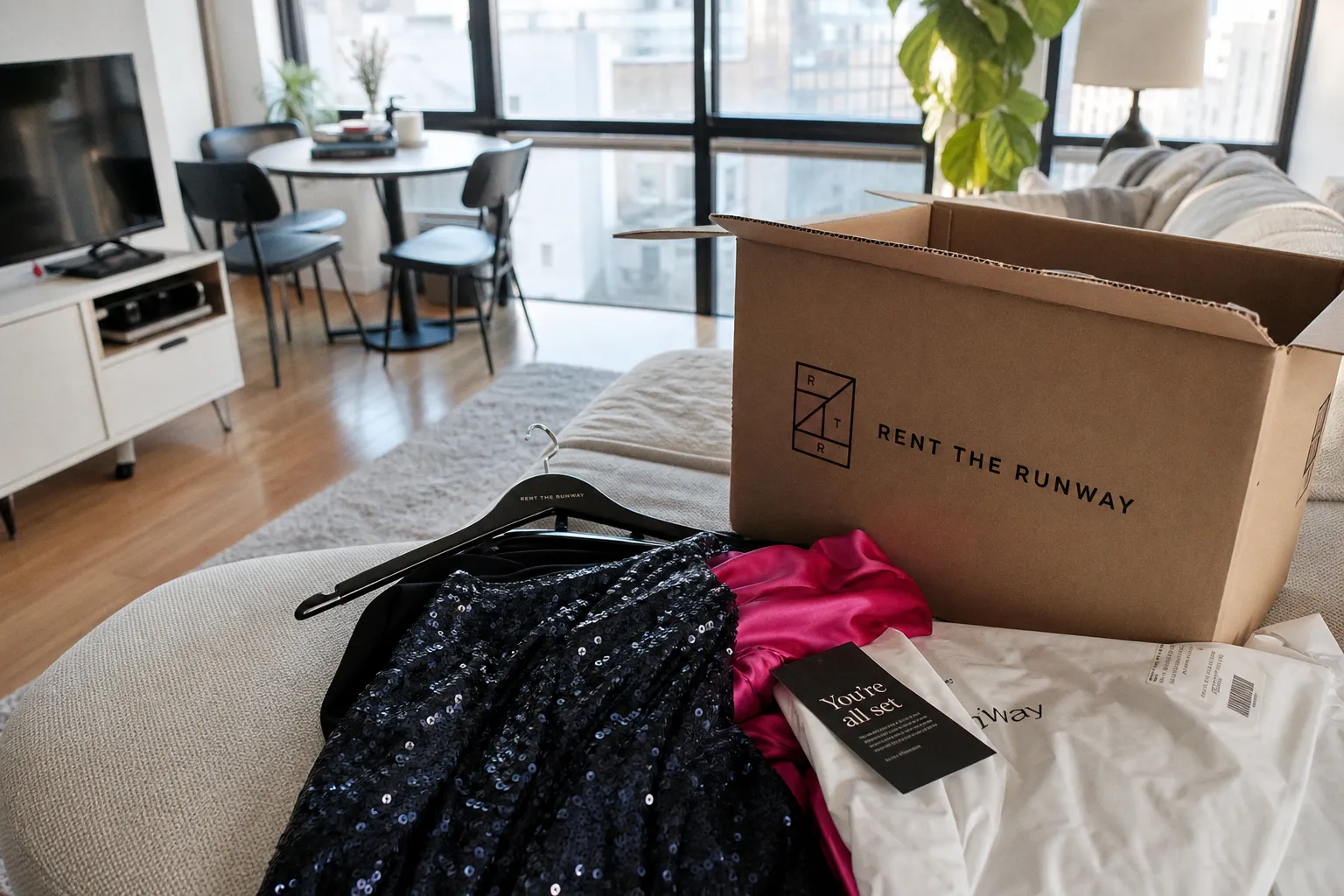
Rent the Runway is the undisputed giant. Its inventory is a deep dive into the designer playbook, from Marchesa to Monique Lhuillier. The per-item rental is perfect for a single event. You get the gown for 4 or 8 days, wear it, return it. Their subscription is better for those with a packed social calendar. The catch? Prime pieces get booked fast, especially around award season.
Nuuly (owned by URBN, the parent of Anthropologie) plays a different game. It’s a single, flat monthly fee for a box of six items. The aesthetic skews more bohemian, contemporary, and Instagram-ready than pure red carpet. It’s less about finding the Oscar gown and more about curating a cohesive look for a weekend of events. The value proposition is volume over singular impact.
Armoire targets a slightly different demographic—the power player who needs to rotate through statement pieces for work and play. It’s less about the ball gown and more about the sharp cocktail dress or the power suit. Its inventory is curated with a professional edge.
For a one-off quest for an “Oscar-style” gown, Rent the Runway’s à la carte model is your starting point. Browse, filter by “black tie,” and read the reviews obsessively. The reviews are your secret weapon—they’re full of real-world intel on fit, fabric quality, and whether a dress truly photographs well. For example, a specific Badgley Mischka floral column gown might look sleek online, but reviewers will tell you if the back zipper snags or if the silk blend wrinkles easily after sitting. This granular feedback is pure gold.
Decoding the Rental Fine Print: Insurance, Dry Cleaning, and Shipping
Here’s where the magic trick reveals its mechanics. The rental price is all-inclusive, but “all-inclusive” has limits. Understanding the terms is the difference between a slick experience and a financial headache.
Every major platform includes basic insurance in the rental price. This covers minor mishaps—a small stain, a loose bead, a slight snag. It’s designed for the accidents that happen when you, you know, actually wear the dress. But this isn’t a blanket “do-whatever-you-want” policy.
The real risk is in the exclusions. Significant damage, structural tears, or loss are on you, and “on you” can mean up to the full retail value of the garment. That $150 rental just became a $1,200 nightmare if you rip the train on a escalator. This is the non-negotiable cost of the illusion.
Here’s the operational checklist you can’t skip:
1. Dry Cleaning & Returns: Handled by the platform. You get a prepaid shipping label. Your only job is to get it in the mail by the due date. Late returns incur fees that can negate your savings. Some, like Rent the Runway, offer a one-day grace period, but don’t count on it.
2. The Fit Dilemma: You can’t tailor a rental. This is the critical gamble. Your strategy:
* Scrutinize Size Charts: Don’t assume you’re your usual size. Designer sizing is notoriously erratic. A size 10 in one brand is a 12 in another.
* Mine the Reviews: Look for reviewers with your height, weight, and build. Their feedback on “runs small” or “lots of room in the bust” is gospel.
* Use the Styling Photos: Look at how it hangs on the model, not just the flat lay. Note the model’s height and how much fabric pools at the bottom—that’s your hemming guide.
3. The Timeline Trap: The rental period starts on your delivery date and ends on your return date. Factor in shipping time. If you live outside a major metro hub, that 4-day window can shrink fast. An 8-day rental is often the safer, stress-free choice.
Strategic Timing: Managing Your 4-to-8-Day Rental Window
This is logistics, not magic. Your rental window is a countdown, and mismanaging it is the most common way people botch the experience. A 4-day rental is a sprint. An 8-day rental is a marathon with room for error.
For a 4-day window, you need military precision.
* Day 1 (Delivery): The gown arrives. Try it on IMMEDIATELY. Check for any issues—stains, tears, missing accessories. Photograph everything from multiple angles in good light. If there’s a problem, you need to contact customer service that same day to report it and discuss options. Waiting until Day 3 voids any claim.
* Days 2-3 (The Event): This is your wear period. Have a plan for steaming (a handheld steamer is your friend—steam from the inside to avoid water marks on sequins or delicate fabrics) and for storing it properly afterward. Don’t throw it on the floor in a post-event haze.
* Day 4 (Return): Pack it up exactly as instructed—usually in the provided garment bag and box—and get it to the shipping carrier with tracking. Take a photo of the package with the label visible. Your proof is your peace of mind.
The 8-day rental is the smarter play for most people. It gives you a buffer. You can receive the dress, have it steamed professionally if needed, wear it for your event, and still have a day or two to breathe before returning it without panic. The cost difference between a 4-day and 8-day rental is often minimal—sometimes as little as $20-$30—and the peace of mind is worth every penny.
Book early. Seriously. The most sought-after gowns are claimed months in advance for major awards season (January-April) and during wedding season (May-October). If you’re aiming for a specific look from a designer like Jenny Packham or Tadashi Shoji, set a calendar reminder to book the moment the rental window opens for your date. The popular sizes in the most iconic dresses vanish first.
Fit and Fabric: Avoiding the Pitfalls of Online Designer Rentals
A photo is a flat, two-dimensional lie. The texture of the fabric, the weight of the beading, the way a material drapes—it all gets lost in translation. This is the primary risk of renting sight-unseen.
The fabrics that almost always photograph well and have decent stretch are crepe, jersey, and certain poly blends that mimic silk. They’re forgiving and travel well. The fabrics that are a gamble are stiff duchesse satin (shows every lump and bump), delicate tulle (prone to snags from everything, including your own jewelry), and heavy, ornate beading (adds significant weight, can be itchy against skin, and is notoriously damage-prone). A fully beaded Marchesa gown is a fantasy; it’s also a potential $2,000 liability if a bead catches on something.
Your fit playbook should be non-negotiable:
* Know Your Numbers: Your bust, waist, and hips in inches. Have them handy. Compare them relentlessly to the size chart provided for that specific garment. When in doubt, size up. A tailor can take in a seam; they can’t magically add fabric to a rental.
* The Review Deep Dive: Ignore the “I felt like a princess!” fluff. Search for specific keywords: “tight in the shoulders,” “long in the torso,” “needed a sticky bra,” “runs large,” “no room for hips.” These are the actionable data points.
* Accessory Intel: Does it need specific undergarments? A particular type of shoe? Does the back require a certain style of bra? Reviews will often mention, “You can’t wear a regular bra with this, and the fabric shows every line,” which is critical information that changes your entire prep.
The goal isn’t just to wear the dress; it’s to inhabit the silhouette. The fantasy collapses if you’re tugging at a neckline or wincing from beaded straps all night.
Remember, you’re not just renting a dress; you’re renting a silhouette. The goal is to find the piece that works with your body, not against it. That requires research, not just wishful thinking.
The next PR move in this space is already on the horizon. Watch for celebrities to start “renting” their red carpet looks for environmental points, spinning a cost-saving measure into a virtue-signaling narrative. The machine never stops. It just rebrands.
Your move is to be a smarter consumer within that machine. Use the platforms as tools, not as promises. Decode the fine print, master the timeline, and obsess over the fit. The red carpet is a stage, and for a few hundred dollars, you can rent your costume and play the part for a night. Just don’t forget to send it back.