Which Real Housewives Wine Is Actually Worth Buying?
The Wine Aisle Has a Bravo Problem
The Real Housewives franchise has spawned an entire economy of branded products, and wine sits right at the center of it. From Lisa Vanderpump's rosé ventures to Bethenny Frankel's Skinnygirl juggernaut to the parade of labels that surface every season, these women have turned fermented grapes into serious revenue streams. But the reality behind each label — who actually made the wine, where the grapes came from, and whether the price tag reflects anything beyond a familiar name — varies so wildly from one bottle to the next that treating them as a single category is the first mistake a buyer can make.
The White-Label Trap: How Celebrity Wine Actually Gets Made
Let's get the uncomfortable mechanism out of the way first. Most Real Housewives wines are what the industry calls "white-labeled." In practical terms: the celebrity partners with an existing winery or bulk wine producer, negotiates a label deal, and bottles mass-produced wine under her own name. She may have tasted it. She may have chosen the font on the label. But she almost certainly did not walk vineyard rows in Napa, oversee the harvest, or spend a single morning in a cellar adjusting blends.
This is the industry norm, not the exception. White-labeling is how the vast majority of celebrity beverages — wines, spirits, canned cocktails — get to market. The economics make intuitive sense: building a winery from scratch costs millions and takes years. Licensing your name to a producer who already has distribution, supply chains, and bottling infrastructure? That's a weekend's worth of negotiations and a signature on a contract that reads a lot like a merchandising agreement.
The problem isn't the model itself. It's the optics. When a Bravo star poses in a vineyard for Instagram, sipping from a glass with a golden sunset behind her, the implicit narrative is: I made this. This is my craft. This is personal. And sometimes it genuinely is. But more often, the reality is closer to a licensing agreement that functions identically to a T-shirt deal — same energy, fermented grapes instead of cotton.
The question isn't whether a Housewife can sell wine. It's whether you're buying a story or a bottle — and what each one is actually worth to you.
Vicki Gunvalson's foray into spirits with Vicki's Vodka and the wave of Housewives-branded wines that followed have faced consistently mixed reviews, and the pattern is instructive: when the celebrity involvement stops at the label, the product tends to land squarely in "perfectly fine, nothing memorable" territory. Which, depending on your expectations, might be exactly what you want — or a $20 disappointment.
Decoding the Fine Print: Why the Back Label Matters More Than the Bravo Logo
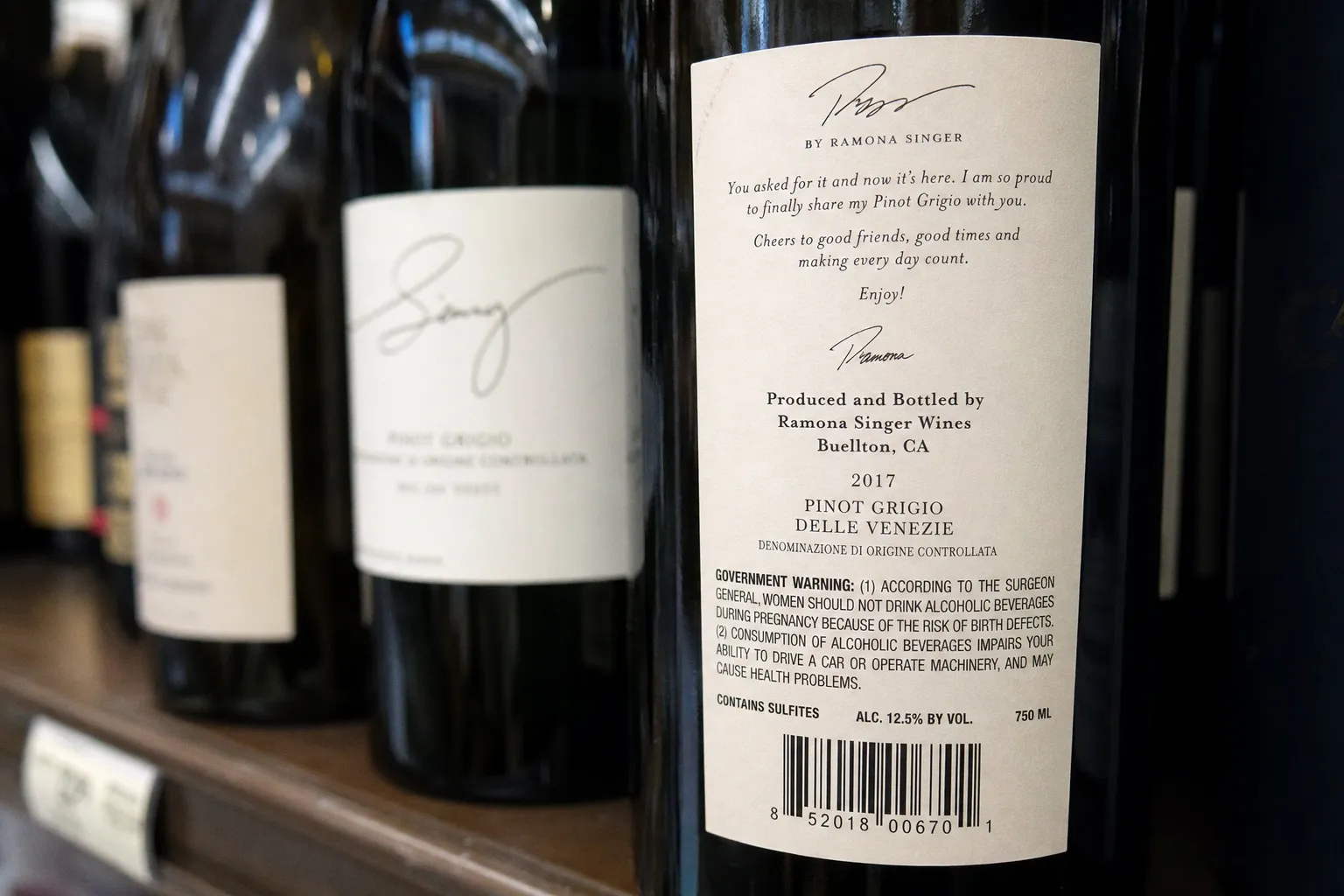
Here's where pragmatism earns its place at the table. If you want to know whether a bottle of Housewife-branded wine represents genuine winemaking involvement or pure celebrity packaging, the answer is already on the bottle. Specifically, one line of text on the back label that most people walk right past without a second glance.
The phrasing tells you almost everything:
| Label Statement | What It Actually Means |
|---|---|
| "Produced and Bottled by" | The named company actually made the wine — oversaw fermentation, blending, and bottling. Strongest indicator of real involvement. |
| "Vinted and bottled by" | A middle-ground term. Some participation in the winemaking process, but the grapes and initial production may be partially outsourced. |
| "Cellared by" | The wine was made elsewhere and stored or finished by the named entity. Could be anyone's juice in that bottle. |
| "Bottled by" | The least informative option. The named party simply handled bottling. The wine could have originated at any facility, from any source. |
This isn't industry gossip — it's federal regulation, governed by the Alcohol and Tobacco Tax and Trade Bureau (TTB). The label language is legally defined, and once you know to look for it, you'll start seeing the pattern immediately. A disproportionate number of celebrity wines sit in that "cellared by" or "bottled by" territory, which is a polite, regulatory way of saying the name on the front has very little to do with what's sloshing around inside.
If you're shopping with the same discernment you'd apply to any significant consumer choice — whether that's comparing healthcare options and clinic reviews or vetting a financial advisor before handing over your portfolio — the label check takes ten seconds and tells you more about the product than any Instagram campaign or reunion plug ever will.
The Skinnygirl Effect: How Bethenny Set the Template Everyone Copied
No conversation about Real Housewives wine is complete without acknowledging the transaction that rewired the entire landscape. In 2011, Bethenny Frankel sold her Skinnygirl brand for an estimated $100 million. Now, Skinnygirl is technically a low-calorie cocktail line rather than a traditional wine brand, and that distinction matters for wine purists. But the cultural and commercial impact was seismic: it proved that a Real Housewife could build a beverage empire worth nine figures, and every cast member who came after took detailed notes.
The Skinnygirl playbook was elegant in its sequencing. Identify a genuine gap in the market — lower-calorie, accessible cocktails for women who didn't want to drink like they were at a fraternity party. Build a recognizable brand voice around that gap. Then leverage television exposure as a perpetual, essentially free marketing engine that runs for years. The liquid itself was almost secondary to the narrative architecture surrounding it. And that formula — brand identity first, product second — became the template for nearly every Housewife wine launch that followed.
The critical difference is that Bethenny had a genuinely distinct concept with clear market positioning. Most of what came after was considerably less differentiated. When five different Housewives are all selling rosé with similar label aesthetics, similar price points, and similar Instagram content featuring golden-hour vineyard shots, the only real variable left is personal brand loyalty. And personal brand loyalty, while it moves units, doesn't improve fermentation.
Separating the Sip from the Hype: Why Price Premiums Rarely Reflect Quality
Here's the math that nobody promoting these bottles wants you to scrutinize. A typical mass-market celebrity wine — Housewife-branded or otherwise — tends to land in the 3.5 to 4-star range on consumer platforms like Vivino. That's drinkable. It's perfectly serviceable for a Tuesday night on the couch watching the very show that inspired the purchase. But the price point almost never reflects that middling-to-decent quality tier.
Non-celebrity wines from established regions — a solid Côtes du Rhône, a Central Coast Chardonnay, a Montepulciano d'Abruzzo from a cooperative with decades of history — consistently outperform celebrity bottles at the same price or lower. You're paying a markup that is entirely attributable to the name on the label. In business terms, that's a brand premium. In wine terms, that's money you could have spent on something genuinely better in the glass.
The pricing reality breaks down roughly like this:
- Under $12: If a Housewife-branded wine is priced here, it's likely closer to its actual market value. No shame in the purchase — just calibrate expectations accordingly.
- $12–$18 range: This is where you can find legitimately excellent, well-rated wines from reputable regions. Celebrity bottles in this bracket are almost entirely paying for the logo.
- $20–$30 range: At this price point, you're competing with serious single-vineyard offerings and small-production wines with real craft behind them. Celebrity bottles almost never justify this tier on liquid alone.
The standard alcohol content for most of these table wines sits around 12–14% ABV, which is completely average and tells you nothing distinctive about the winemaking. There's nothing in the chemistry, the sourcing, or the production that separates a $25 Housewife rosé from a $9 Provence rosé except about sixteen dollars of brand narrative.
You're not buying a better wine. You're buying a better story about the wine. Make sure the story is worth the premium to you — because the glass doesn't care whose name is on the label.
How to Navigate the Shelf Without Overpaying for a Name
If you're genuinely interested in exploring the Real Housewives wine universe without getting taken for a ride, the pragmatic approach is surprisingly straightforward. It requires about sixty seconds of additional effort per bottle — and that small investment changes the entire experience.
Check the back label before anything else. Look for "produced and bottled by" as the strongest indicator of actual winemaking involvement. If it says "cellared by" or simply "bottled by," understand clearly that you're paying for packaging, not provenance.
Research the region, not the name. If a wine claims Napa Valley, Willamette Valley, or a reputable Italian or French appellation, that's a meaningful quality signal — but only if the label confirms the grapes actually originated there. Appellations on white-labeled wines can be strategically misleading.
Cross-reference with independent ratings before buying. Vivino aggregates millions of user reviews. Wine Spectator, James Suckling, and Vinous publish professional assessments. A 3.8 on Vivino from 2,000 reviews tells you more about what's in the bottle than a celebrity endorsement or a reunion episode toast ever could.
Compare at the same price point. Before spending $22 on a Housewife rosé, ask the person at your local wine shop what they'd recommend at that price from established producers. The quality gap is often startling, and good shop staff love this question because it lets them actually do their job.
Be honest about your purchase motivation — and honor it. There is absolutely nothing wrong with buying a bottle because you genuinely like the Housewife and want to support her brand. That's a valid consumer choice, full stop. Just make it with clear eyes, the same way you'd approach any transaction where the brand story and the product quality might be running on parallel tracks that don't quite converge.
Some Housewives have genuinely invested in their wine projects — visiting vineyards, developing relationships with specific winemakers, building blends with real intentionality over multiple vintages. Others have treated wine as one more SKU in a diversified merch portfolio alongside candles and athleisure. The back label won't always tell you definitively which is which, but combined with a little independent research, it narrows the field considerably.
The Bottom Line: Brand Loyalty Has a Price, and That's a Personal Call
Here's the honest read on the Real Housewives wine landscape: most of it is perfectly drinkable at a Tuesday-night level, very little of it is genuinely exceptional, and all of it carries a premium that has nothing to do with what's fermenting inside the bottle. That's not a scandal — it's celebrity commerce operating exactly as designed. The same dynamic plays out in tequila, skincare, athleisure, and every other category that reality television personalities have touched in the last decade.
The savvy move is to approach these bottles with the same awareness you'd bring to any branded product: a clear understanding of the distance between marketing narrative and material reality. If that narrative genuinely brings you joy — if opening a bottle of your favorite Housewife's rosé elevates your viewing experience and turns a regular Tuesday into something that feels like an event — then the premium is buying you something real. It's just not buying you better wine. It's buying you a better moment, and moments have their own kind of value.
If your primary goal is the best wine at the best price, skip the Bravo aisle entirely and let your local wine shop staff guide you. They'll outperform every celebrity label on the shelf, every single time, and they'll do it without charging you for a confessional.
And if you're somewhere in the middle — curious, open-minded, willing to experiment but not willing to be naive about it — start with the back label, cross-reference the ratings, and aim for no more than $15. That's the sweet spot where the story and the sip can genuinely coexist without the creeping sense that you paid extra for someone else's brand narrative instead of your own glass.