Best dressed celebrities: is copying men's style worth it?
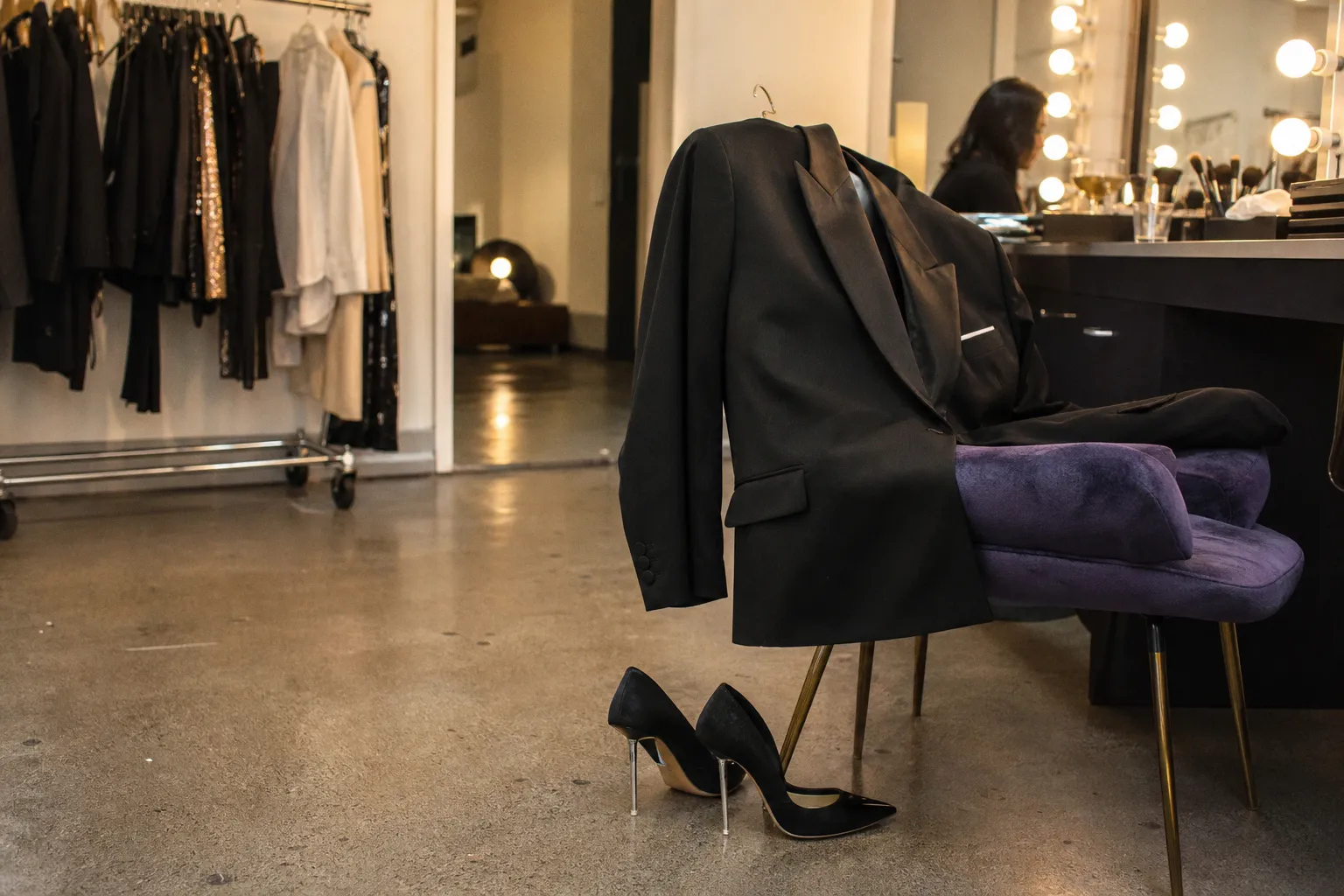
Suiting has been a red carpet fixture since before most of these stylists had stylists, and the women-borrowing-from-men paper trail runs from Marlene Dietrich in the 1940s to Blake Lively in 2018. The only thing fresh in 2025 is the press release cycle.
So is "copying men's style" worth it? Only if you know what you're actually copying. Because every time a male celebrity walks a carpet in a sharp suit, the internet hands him one of two origin stories: effortless genius or gender-bending revolutionary. Both are usually a third thing — a stylist, a tailor, and a Vuitton invoice. Here's the forensic pass on what's real, what's spin, and what to actually steal.
The Met Gala's Menswear Moment: Receipts, Not Hype
"Superfine: Tailoring Black Style" was a real exhibition — 12 sections at the Costume Institute, running May 10 through October 26, 2025 — anchored in the history of Black dandyism. Co-chairs Colman Domingo, Lewis Hamilton, A$AP Rocky, Pharrell Williams, and Anna Wintour chaired the night. That part is verifiable. What isn't verifiable: the idea that menswear suddenly became a 2025 phenomenon because Vogue put it on the calendar.
The truth is the red carpet was never spontaneous. Co-chair looks go through months of styling, fittings, and brand coordination before any photographer clicks a shutter. So when critics swooned over Domingo's cape or A$AP Rocky's AWGE tailoring as "spontaneous" risk-taking, what they were watching was a heavily pre-produced styling cycle that happens to align with a museum's programming window. The looks are good. The narrative is manufactured.
Black dandyism didn't need a Met Gala to legitimize it. The Met Gala needed Black dandyism to move a $31 million ticket.
The Icons Who Actually Carry Menswear Right Now
Most "best dressed" listicles run a name, a designer credit, and a vibe word. Here's the version with receipts — who is shaping menswear in 2025, what move is doing the work, and what the PR team is papering over.
| Icon | Signature Move | The Receipt | The PR Spin | The Reality |
|---|---|---|---|---|
| Colman Domingo | Capes, rich textures, theatrical tailoring | 2025 Fashion Awards host; Met Gala co-chair | "Genre-bending risk taker" | Working actor with a stylist team fluent in theatrical volume |
| Jacob Elordi | Bottega Veneta minimalism, heavy shoulders | Longtime brand ambassador with the Italian house | "Effortless leading man" | Paid face whose job is to look unbothered on cue |
| A$AP Rocky | AWGE tailoring, vintage references, gender-fluid cuts | Creative director of his own line; Met co-chair | "Fashion revolutionary" | A mogul turning personal style into a commercial product |
| Timothée Chalamet | Backless jackets, sequins, sculptural cuts | Three years of "risk" press cycles | "Generation-defining iconoclast" | Major fashion house ambassador walking pre-approved looks |
| Pedro Pascal | Soft tailoring, knitwear, casual jackets | Internet boyfriend era | "Most relatable dresser" | A guy in great knits who refuses to prove anything |
| Alexander Skarsgård | Sharp minimal suiting, occasional womenswear touches | Veteran red carpet presence | "Quiet luxury poster boy" | A Swede who can wear a paper bag and look tailored |
Every name on this list is doing the work. But every name on this list also has a brand deal, a stylist team, and a tailor on retainer. The "effortless" is a payroll.
From Dietrich to Blake: The 80-Year Paper Trail of Women in Suits
This is where the "borrowed from the boys" PR cycle gets exposed fastest. Every few years, a celebrity "rediscovers" the suit, and outlets treat it like the moon landing. The historical record is unambiguous:
- 1940s — Marlene Dietrich popularized trousers, tuxedos, and top hats for women on screen. Not a phase. A career.
- 1977 — Diane Keaton wore a vest, tie, and oversized trousers in Annie Hall. Won Best Actress. Menswear became a permanent Hollywood fixture.
- 1990 — Julia Roberts walked the Golden Globes in an oversized Armani suit she bought off the rack on Rodeo Drive and had altered. Still cited 35 years later.
- 2018 — Blake Lively wore over 10 suits during her A Simple Favor press tour, including custom Ralph Lauren and Versace menswear — and publicly called out the double standard that women get labeled "repetitive" for wearing suits while men get labeled "consistent."
Lively didn't just wear the suits. She named the mechanism. So when outlets in 2025 write about Zendaya, Teyana Taylor, Sabrina Elba, or Elle Fanning as though they're inventing something, they're not covering fashion — they're ignoring the Dietrich → Keaton → Roberts → Lively chain. The question isn't whether women can wear suits. The question is why the press keeps treating the choice as news.
A woman in a suit hasn't been "risky" since 1942. The risk lives entirely on the headline writer's side.
The Art of the Fit: Why Tailoring Beats Off-the-Rack
This is where most of the "steal his look" content collapses. The internet will tell you to grab a $200 blazer and roll the sleeves. That's not how any of the icons above got dressed. Here's what's actually doing the work under the styling.
Shoulders
The single biggest tell. An oversized blazer that sits at your shoulder reads intentional. One that slides down your arm reads like costume. Menswear-inspired blazers should land on the bony edge of the shoulder, not melt past it. This is the line between "editorial" and "thrift store find from 2014."
Chest and Button Stance
Off-the-rack menswear is cut for a flat chest and longer torso. Women's tailoring accounts for bust and waist. If you're borrowing from the men's section, the chest will gap at the button. A tailor can take in the chest by 1–2 inches for under $40 in most cities. That single fix is the difference between a look and a costume.
Proportion Play
This is the stylist's real job. The rule: oversized on top, fitted on the bottom — or the reverse. Oversized blazer + straight-leg trouser + loafer is the Zendaya / Elle Fanning silhouette. Fitted vest + wide-leg trouser + heel is the Teyana Taylor silhouette. Both work because the eye reads contrast. Skip the rule and the whole outfit reads like you got dressed in a dark room.
Length
Men's jackets hit at the hip. On a 5'6" frame, that becomes a tunic. Either crop the jacket to a deliberate short-line, or pair it with a higher-rise trouser to break up the drop. Most "I bought a men's blazer and it looked wrong" complaints are length complaints in disguise.
The cleanest menswear case studies often sit outside the celebrity cycle entirely. Athletes and public figures who built decades-long style consistency — the kind of wardrobe discipline that outlasts any single press tour — have something to teach red carpet readers about how tailoring compounds over time. The Roger Federer arc is a useful reference for anyone studying how a consistent menswear silhouette becomes a personal signature. Tailoring as long game, not red carpet theater.
The Staples Worth Stealing — And How to Actually Wear Them
Six menswear pieces that have shown up across red carpets and street style for women — with the styling moves that make each one actually work off the carpet.
1. The oversized blazer. Foundation piece. Buy one size up, take it to a tailor for shoulder and chest work, pair with a fitted bottom (pencil skirt, straight-leg denim, cigarette trouser). Volume up top needs a line underneath — otherwise the silhouette collapses into a robe.
2. The necktie. The most underused item in the Keaton playbook. Wear it slightly loosened over a plain tee, or layered under an open cardigan. Don't knot it tight. The lazy knot is the whole point. If your tie looks like you're about to close a merger, you've already lost the room.
3. The loafer. The most successfully borrowed shoe of the last five years. Gucci horsebit, vintage Ferragamo, or a clean penny loafer. Works with everything from a slip dress to a trouser suit. The trick is a clean sock line or no sock at all — anything visible breaks the silhouette.
4. The vest. Teyana Taylor's signature. Layered over a button-down, under a blazer, or solo with high-waisted trousers. This is the hardest piece to fake — fit is everything, and a tailor is non-negotiable. Off-the-rack vests look like costume; tailored vests look like editorial.
5. The floral brooch. Quietly everywhere in 2024 and 2025. Pinned to a lapel, a hat, a bag strap, or even the tongue of a loafer. Costs $20 and rewrites the entire read of a plain jacket. The single highest ROI item on this list.
6. The men's dress shirt. Worn open over a tank, fully buttoned and tucked into high-rise trousers, or layered under a slip dress. The point is the collar and the cuff — those are the borrowed details. Don't try to make it look like a women's blouse. Let it look like a men's shirt on you.
The Verdict
Yes, copying men's style is worth it. Not because it's a 2025 revolution — it isn't — and not because men are doing it better. They're doing it with bigger teams and bigger invoices. It's worth it because menswear silhouettes are structurally easier to wear well: the lines are simpler, the tailoring discipline transfers cleanly to women's bodies, and the proportion rules have been tested on a red carpet for 80 years.
What's actually worth skipping is the PR framing. The next time a headline calls Zendaya "fearless" for wearing a suit, or credits Timothée Chalamet with "reinventing tailoring," remember the formula: stylist + tailor + brand deal + carefully timed press cycle. The clothes are real. The mythology is sponsored.
So copy the look. Pay the tailor. Ignore the origin story.