Celebrity style clothes: our 30-day replica quality test
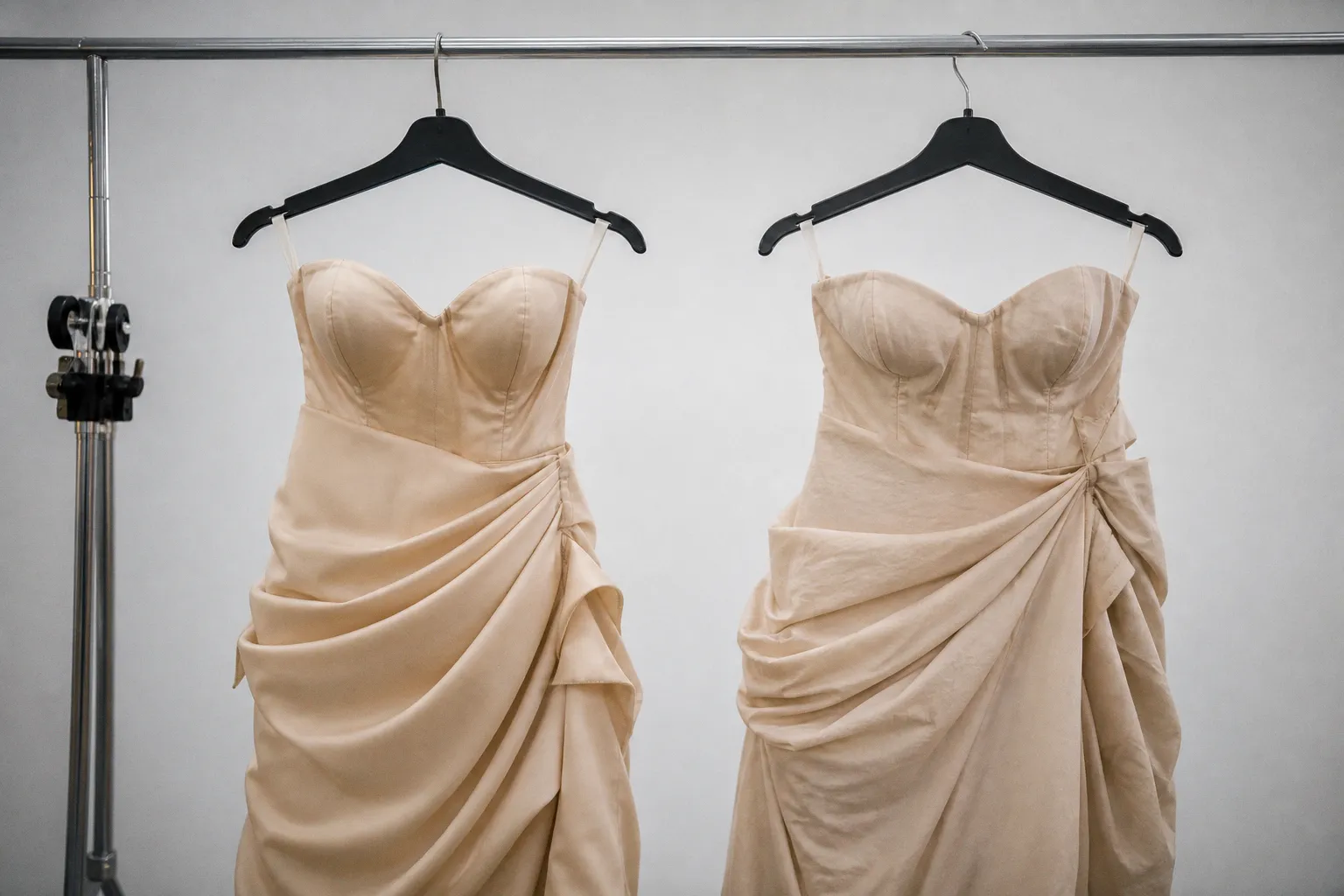
A gown can look remarkably close in a seller’s listing; a pair of trousers can borrow the same high-waist silhouette as a Hailey Bieber street-style image. But once the garment has to move, sit, hang, stretch, and return from a wash cycle, the distance between “inspired by” and convincing begins to show.
Over a 30-day wearability test, the pattern was consistent: lower-cost replicas can deliver a useful visual reference for a one-night event, social content, or a very specific outfit idea. They rarely deliver the fabric behavior, construction, or ease that makes an original designer look feel expensive in real life. That gap is not about logo worship. It is about weight, cut, finishing, and the quiet structural decisions that make clothes cooperate with a body.
The most revealing part is that celebrity fashion dupes do not fail in dramatic ways at first. They fail through optics. A neckline shifts a little too far outward. A satin skirt catches light like plastic rather than liquid. A blazer’s shoulder line collapses by mid-evening. None of that may show in a carefully angled mirror photo. All of it is visible when the wearer walks into a room.
The reality of replica construction: why the drape fails
Drape is the difference between a garment that appears to be wearing you and one you appear to be negotiating with.
Original red-carpet pieces are not merely copied from a front-facing image. They are engineered around movement: where a bias-cut skirt pulls, how a bodice is supported, where a sleeve needs ease, how much weight a hem needs to fall cleanly. Replica celebrity style clothes are typically working from reference images and simplified production patterns. That process can preserve the broad idea—the slit, the neckline, the color, the embellishment placement—while losing the architecture.
The issue becomes especially obvious with looks that rely on restraint:
- A column dress needs a precise cut to skim instead of cling.
- A tailored trouser needs the correct rise, seat curve, and leg balance to keep its line.
- A draped halter requires enough fabric weight and internal support to avoid twisting.
- A structured blazer needs interfacing and shoulder construction, not simply a boxier silhouette.
- A slip dress depends on fabric grain and seam placement more than on its color or a cowl neck.
Factory sewing margins can vary by roughly half an inch to three-quarters of an inch. In a roomy sweatshirt, that is survivable. In a fitted corset top, a bodycon dress, or sharply cut pants, it can rewrite the entire garment. The wearer then does what people understandably do: orders a second size, pays for alterations, buys fashion tape, adds shapewear, or decides the outfit “just needs confidence.” Sometimes it does. More often, it needs a better pattern.
This is also why online listing photos create such a misleading emotional contract. The shopper is not only buying a dress; she is buying the predicted reaction of wearing it. The image suggests a clean, composed moment of narrative control. The package may deliver the color and the mood, but not necessarily the composure.
The replica can copy the headline of a celebrity look. The original earns the close-up.
If the goal is a single photo, that distinction may be manageable. If the goal is to feel good through an entire wedding reception, birthday dinner, prom, or evening event, construction becomes less negotiable.
Fabric weight: the £20 trousers experiment explained the whole category
The most useful lesson from lower-priced replicas came from trousers in the roughly £20 range. On a product page, they presented the familiar celebrity-style formula: long leg, high waist, relaxed tailoring, a minimalist neutral shade. This is the kind of affordable celebrity style that looks effortless on Instagram because the visual language is so clean.
In person, the fabric told a more complicated story.
Lower-grade wool or silk blends, and synthetic fabrics made to imitate them, are often lighter than the originals they reference. That does not automatically make them unwearable. Light fabric can be lovely in summer. The problem is when a design depends on density to hold its shape. A wide-leg trouser made from thin material can cling at the thigh, crease sharply at the hip, and swing open in a way that interrupts the intended vertical line. Instead of looking relaxed, it can look under-supported.
The test was not whether the trousers looked identical to a celebrity’s. That is not a fair or useful standard. The question was whether they could hold their own after actual wear: commuting, sitting for a meal, moving through a full day, and being laundered according to their care instructions. The weak points were predictable:
1. The waistband lost authority first. A waistband that feels firm for an hour may soften or roll after regular sitting. On a high-rise silhouette, that shifts the balance of the entire look.
2. The creases became more permanent than intentional. Proper suiting develops character over time. Thin blends can develop sharp, unflattering stress lines at the hips and behind the knees, especially when the fibers do not recover well.
3. The hem revealed the shortcut. Wide-leg pants require enough weight to fall straight. With too little, the leg twists, catches on shoes, or flutters in a way that photographs inconsistently.
4. The finish changed after care. Exact long-term durability beyond 30 days is not established here, but the first month was enough to show that a garment’s surface and structure can diverge quickly from its listing promise.
There is a useful distinction between low cost and low value. A £20 pair of trousers can be excellent value if it is honestly designed as a lightweight, casual pant. It becomes poor value when it is sold as a precise version of a celebrity tailoring moment and lacks the material needed to carry that promise.
| Wearability factor | Budget replica | Better-made dupe or accessible contemporary piece |
|---|---|---|
| Initial visual impact | Often strong in a static photo | Strong, with more consistency in motion |
| Fabric weight | Frequently too light for the silhouette | More likely to support the intended shape |
| Pattern precision | Variable; small errors alter fit quickly | More reliable grading between sizes |
| After a full day | Creasing, shifting, and pulling can become obvious | Usually holds its line more calmly |
| Best use case | Costume-adjacent eventwear, one-off content, experimentation | Repeat wear, dinners, work, travel, occasions |
| Risk level | Higher fit uncertainty and limited quality transparency | Higher upfront price, but clearer return and care expectations |
The smart version of the celebrity outfit replica test is not “Can this fool people?” It is “Does this garment remain emotionally easy to wear?” Clothes that require constant tugging, checking, and readjusting have already taken more from the evening than they gave.
Fast fashion and replicas are not the same decision
It is tempting to put every affordable celebrity look in one bucket. But there is a meaningful difference between a fast-fashion interpretation and a counterfeit replica.
Fast-fashion brands, including Fashion Nova, regularly produce inexpensive versions of celebrity-adjacent looks worn by figures such as Kylie Jenner, Cardi B, and Hailey Bieber. Those pieces can be aggressively trend-led, and their quality varies widely. Still, a fast-fashion item is often a translation: it borrows an aesthetic code—exposed corsetry, a sheer layer, a sculptural mini, a monochrome off-duty set—rather than presenting itself as the actual designer garment.
A counterfeit replica is making a different promise. It may reproduce branding, recognizable design elements, or a designer-identifiable look closely enough to blur the line between inspiration and imitation. That changes the calculation. It introduces legal and customs risk, along with the normal uncertainties of fit and quality.
| Question | Fast-fashion celebrity dupe | Counterfeit-style replica |
|---|---|---|
| What is being sold? | A trend interpretation | A closer imitation of a designer item or celebrity look |
| Design intent | Capture the mood and silhouette | Replicate recognizability |
| Quality expectation | Low to moderate, depending on retailer and price | Highly inconsistent; listings can overpromise |
| Returns | Often governed by a mainstream retailer’s stated policy | May be harder to use in practice, especially cross-border |
| Customs exposure | Typically lower for ordinary branded retail goods | Items can be seized and destroyed by customs authorities in some countries |
| Best reason to buy | You like the trend, not the exact famous image | There is no particularly strong practical reason to take on the added risk |
The distinction matters because celebrity style is not a single garment. It is proportion, styling, grooming, and confidence in the silhouette. A clean black blazer with the right shoulder, a well-cut tank, and trousers that fit at the waist will often produce more of the intended red-carpet-to-street-style effect than a questionable copy of a viral designer dress.
If the goal is to echo a look, a thoughtful dupe can be a sensible choice. If the goal is to possess the illusion of the original, the transaction gets emotionally expensive very quickly.
The hidden costs are not always on the price tag
Replica shopping is designed around a very persuasive number. Mid-tier items on marketplaces can sit somewhere between £10 and £80, which makes the original look’s retail price feel almost irrelevant. But the initial price is only one part of the cost.
There is the delivery delay, the uncertainty around customs, and the possibility of being asked to pay unexpected fees. There is the cost of a local tailor trying to rescue a poor armhole or a too-long hem. There is the cost of undergarments purchased to make a thin fabric feel less revealing. And there is the quieter cost: purchasing an item for a specific occasion, then realizing three days before it that the fit has no workable path forward.
Counterfeit goods can be confiscated and destroyed by customs officials in various countries. That is not a minor shipping inconvenience. It is a risk inherent to buying an item that crosses the line from inspired-by fashion into counterfeit territory. The lower price does not remove that exposure; it is partly why the price can exist.
There is also no reason to make claims about chemical safety or dye standards for unregulated replica factories when that information is not clearly available. A garment can look fine out of a package and still offer very little transparency about what went into its production. For an occasional novelty purchase, some shoppers may decide that uncertainty is theirs to accept. It should at least be named plainly.
Affordable style works best when the bargain is visible in the price—not hidden in the wearer’s stress.
The celebrity machine is built on controlled images. A shopper does not need to replicate its least stable parts: opacity, pressure, and a rush to make an outfit validate a moment.
What a 30-day guarantee does—and does not—solve
Some replica-focused retailers offer a 30-day money-back guarantee. Thecelebritydresses.com, which has operated since 2008 and specializes in replica celebrity and red-carpet gowns, states that it offers such a guarantee. That can be more reassuring than buying from an anonymous marketplace seller with little visible customer support.
But a return policy is not the same thing as a frictionless return experience.
For occasionwear, the timeline is particularly sensitive. A dress may arrive with enough time to try on, but not enough time to send back, receive a replacement, and have alterations completed before the event. International shipping can add another layer. Then there is the emotional reality of returns: people are much more likely to keep a compromised dress when they have already planned their hair, shoes, photos, and evening around it.
If you are considering a replica-style gown for a deadline-driven event, treat the 30-day window as a backstop, not a strategy. The practical route is less glamorous but more reliable:
- Order early enough to allow for a return, a replacement, and tailoring if needed.
- Choose silhouettes that tolerate small pattern errors: wrap shapes, adjustable straps, fuller skirts, looser sleeves, or dresses with a forgiving waist.
- Avoid replicas of heavily structured gowns unless you are prepared for fit intervention.
- Photograph the garment in daylight and indoor light before removing tags, because fabric quality can look radically different under flash.
- Check whether the seller’s images show the actual item, a celebrity reference image, or both. Those are not interchangeable forms of evidence.
The more a garment relies on internal corsetry, exact boning placement, a sculpted bust, or a sharp hip line, the less reasonable it is to treat a low-cost replica as a low-stakes purchase. The design is simply asking too much of approximate construction.
Where the aesthetics diverge—and where they do not
The most successful celebrity fashion dupes are not necessarily the closest copies. They are the ones that understand what made the original look work.
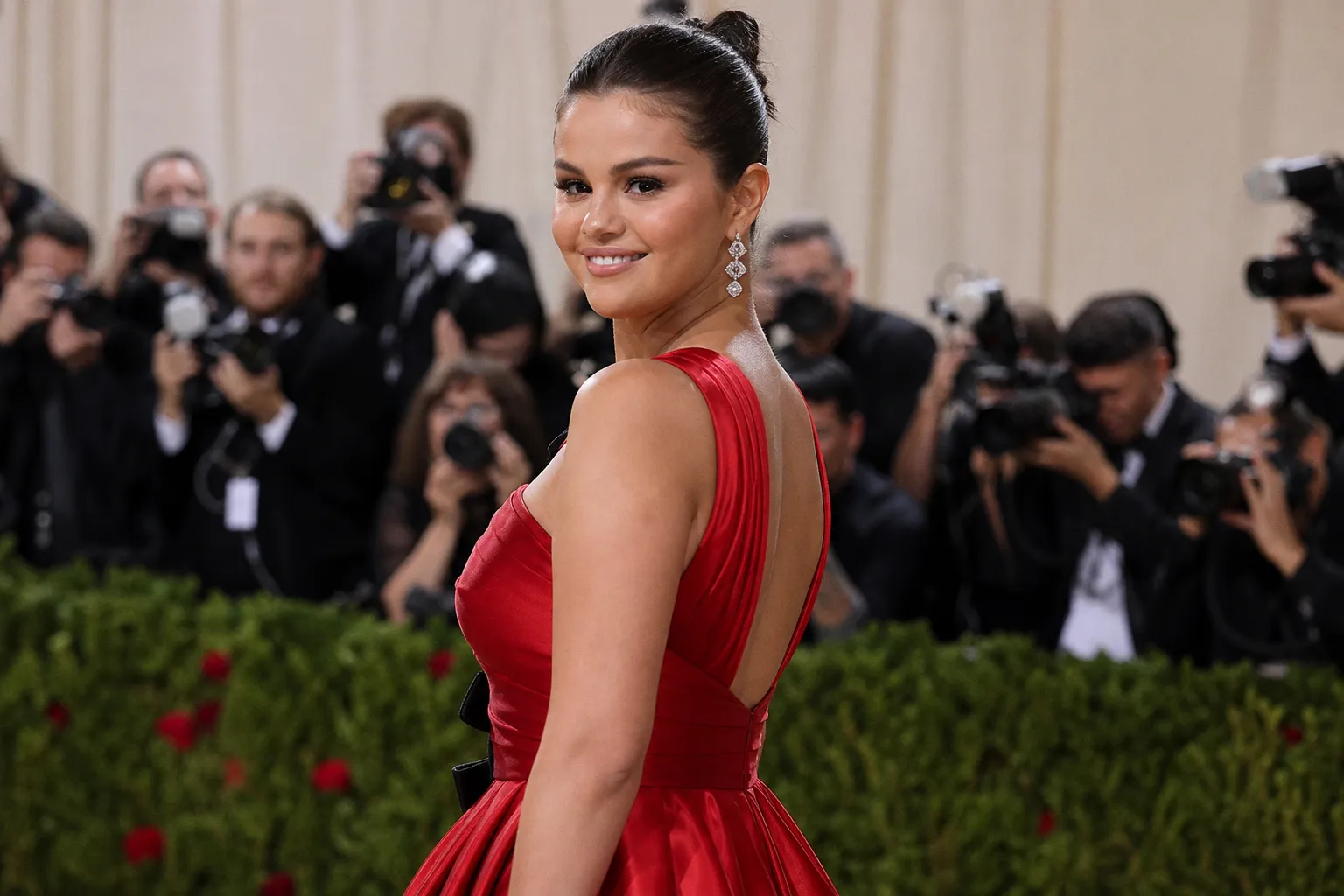
A red-carpet dress may be memorable because of its oxblood color, not its exact seaming. A celebrity airport outfit may work because of its oversized leather jacket against a fitted knit, not because the jacket has a specific label. A viral beauty-and-fashion moment may be driven by slicked-back hair, a clean tonal palette, and one dramatic accessory.
That opens a better route for recreating celebrity outfits: identify the visual hierarchy.
Start with the element that reads first. Is it the shoulder shape? The monochrome color story? The exposed back? The exaggerated trouser length? Then spend proportionally. A strong pair of shoes, a properly fitting jacket, or a better-quality dress fabric will create more credible style optics than trying to copy every visible detail at once.
For 2026 prom and party dressing, this is particularly relevant. The most photographed looks will continue to reward silhouette and color coherence over literal duplication. A satin dress in the right shade, cut simply and altered well, will almost always look more intentional than a complicated replica with loose stones, uneven lining, and a bodice that needs constant boundary management.
That is not a lecture against fun. There is nothing wrong with trying the sheer dress trend, the sculptural mini, the off-duty model uniform, or a dramatic awards-season gown for a night. Fashion is allowed to be playful. The useful line is between play and pressure: between buying a look because it delights you and buying it because a product photo made a very specific promise about who you would become inside it.
The verdict: buy the mood, not the counterfeit fantasy
Our 30-day assessment of celebrity style clothes is measured rather than dismissive. Budget replicas can serve a narrow purpose. They can be entertaining for a costume party, a themed shoot, or a low-stakes experiment with a celebrity silhouette you are not ready to invest in. A basic piece that happens to echo a famous outfit may even become a useful wardrobe extra.
But for repeat wear, high-pressure events, or looks built on tailoring and drape, the replica route is rarely the best value. The fabric weight is often too light, the pattern precision too inconsistent, and the fit margin too unforgiving. Add customs exposure for counterfeit items and vague manufacturing transparency, and the bargain loses much of its romance.
If a celebrity look is genuinely speaking to you, translate it. Keep the color, the proportion, the attitude, the one detail that gives it a pulse. Then choose pieces that have their own integrity. The future-proof version of a famous outfit is not the one that most closely impersonates a red-carpet image. It is the one that lets you enter the room without spending the night managing it.