Celebrity style fashion: which viral aesthetic wins?
Celebrity Style Fashion: the Battle of Viral Aesthetics
The Rise of Method Dressing and Narrative Fashion
The most structurally significant shift in celebrity style fashion this decade is the migration from stylist-as-service to stylist-as-screenwriter. Law Roach's work with Zendaya is the canonical example, but it is no longer the only one: every major press tour in the past eighteen months has arrived with a wardrobe engineered to cohere with the project being sold. The aesthetic consequence is that the red carpet no longer functions as a showcase of personal taste; it functions as a trailer.
Method dressing rewards historical literacy because the reference must read as deliberate without ever reading as a quote. A Schiaparelli bust for the Dune: Part Two press cycle referenced the house's 1937 "shocking pink" and its surrealist bones, while the tailoring read as utilitarian futurism. The look performed both provenance and posture in a single silhouette. This is not nostalgia. Nostalgia is passive. Method dressing is instrumental — the garment is required to do plot work, which is why it has displaced the older, purely aspirational mode of stylist dressing in which a dress existed only to be desired.
Method dressing is what happens when a red carpet look is required to do plot work rather than aspirational work: the garment becomes a synopsis, not a souvenir.
The risk of the method is aesthetic monoculture. When every actor on a slate dresses to their IP, the press tour begins to feel like a franchise rollout rather than a series of human beings. The strongest recent method looks — including Zendaya's 1992-era Mugler-cued vintage at the Challengers premiere — succeed precisely because they treat the film as occasion, not as costume instruction.
Coquette Core and the 300% Surge
The coquette aesthetic — bows, lace, pointed bodices, an orchestrated return to a Pierrot-inflected hyper-femininity — registered a roughly 300% increase in social media mentions through 2024. The figure is from aggregated platform analytics, and the mechanistic reasons are clear: it is replicable. A bow, a slip, a kitten heel, a frosted shadow. Each of these is a low-friction object that a viewer can scan, save, and attempt within an afternoon. Coquette succeeds as a meme precisely because it reduces the cost of entry to almost zero.
Sartorially, however, coquette is doing more interesting work than its meme form suggests. The silhouette draws from the bias-cut slips Madeleine Vionnet codified in the early 1930s, the lingerie-as-outerwear provocation of Jean Paul Gaultier's 1983–85 collections, and the Lolita-coded infantilization that Rei Kawakubo has been interrogating at Comme des Garçons since the late seventies. When worn on a red carpet in 2024 — as it was by a long list of leads at Cannes and the SAG awards — the look reads simultaneously as saccharine and as confrontation. That productive contradiction is why coquette has resisted the expiry date most viral aesthetics face.
| Parameter | Coquette | Quiet Luxury |
|---|---|---|
| Visual density | High ornament, low silhouette | Low ornament, high silhouette |
| Entry cost for replication | Very low | High (provenance matters) |
| Viral half-life | Short, refreshed via variants | Long, slowly decays |
| Reference era | 1930s lingerie, 1980s provocation, Y2K linger | 1990s minimalism, 2010s Phoebe Philo Céline |
| Best worn as | A red carpet mood | A working wardrobe |
The comparison is not symmetric. Quiet luxury is a posture; coquette is a vocabulary. Postures can be sustained for a working life; vocabularies burn brighter and consume themselves faster.
Archival Revival: Y2K and 90s Minimalism in Street Style
If coquette is the high-volume aesthetic of 2024, archival revival is the high-status one. Vintage Y2K and 1990s minimalism — the McCartney-era Chloé, the Helmut Lang gallery, the early Prada minimalism — have returned to celebrity street style through a small and very deliberate set of wearers: Bella Hadid, Hailey Bieber, and the comparatively underrated group of stylists working Los Angeles's editorial-adjacent corner. The shift matters because street style has historically been the place where mass-market trends are seeded; archival retrieval is the opposite gesture. It is anti-mass, anti-trend, anti-velocity.
The economics tell the rest. Vintage archival pieces appreciate; new-season fast fashion depreciates within a quarter. A celebrity photographed in an original 1998 Maison Margiela leather is performing a kind of connoisseurship that a current-season bag cannot match, no matter the price point. The connoisseurship, in turn, converts into style authority, which converts into endorsement valuations, which closes the loop. The archival reading is therefore not nostalgia in the sentimental sense. It is the deployment of a hard-to-fake cultural credential.
A vintage archival piece functions as a hard-to-fake cultural credential: the difficulty of acquisition becomes the difficulty of imitation, and imitation is the metric by which a celebrity style is now judged.
A quieter but consequential consequence: the archival revival has created a new beachhead for the digital-native aesthetic lineage, where physical garments begin to behave as carry vessels for layered references, and the very idea of provenance is being stress-tested by a generation that treats digital collectibles and physical fashion as a single ward-robe. The convergence is visible in how Gen Z blends Indo-Western fashion with digital aesthetic traditions — the older wardrobe grammar is being re-edited for a feed-first eye.
The Met Gala Effect: 10 Billion Impressions in 48 Hours
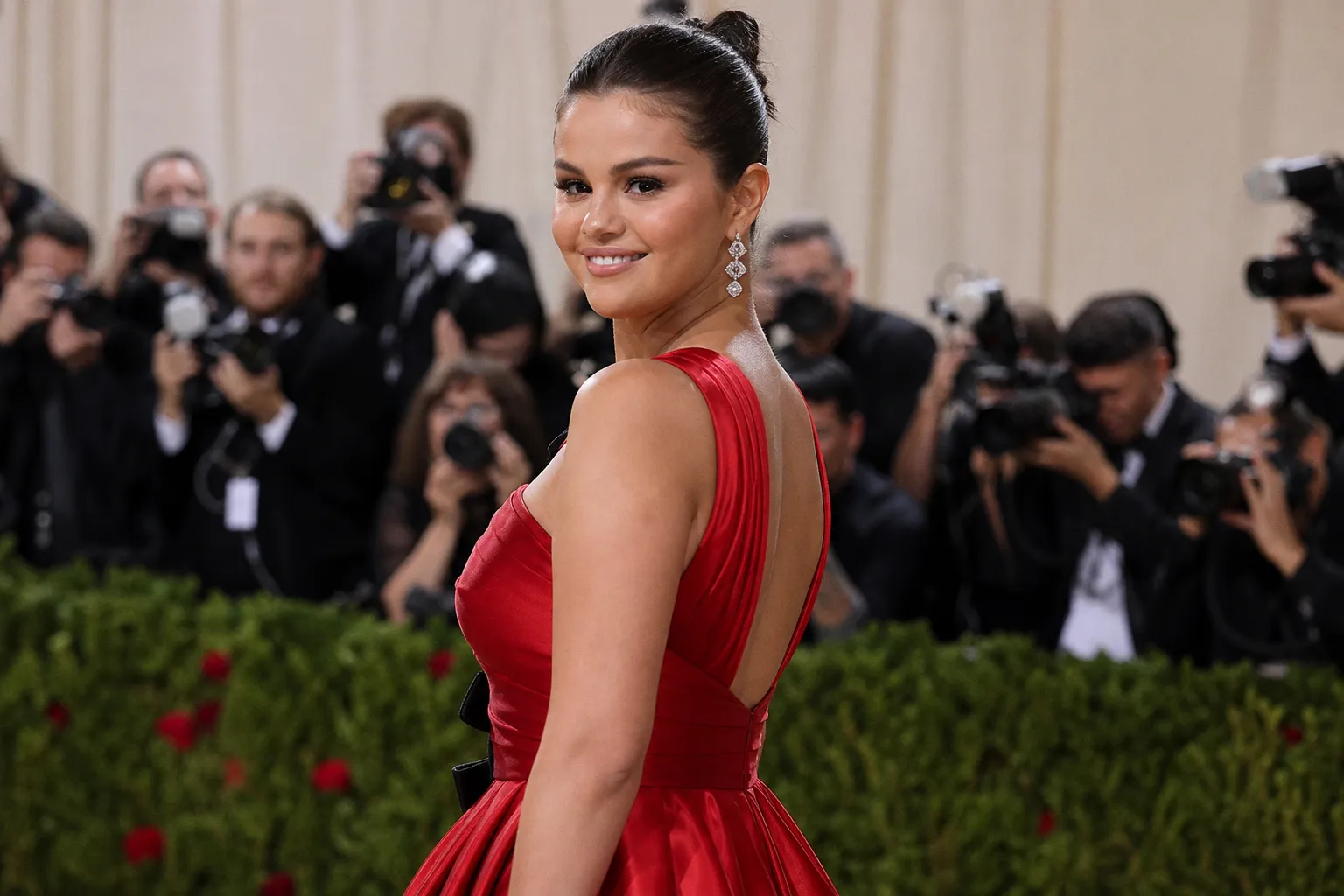
The 2024 Met Gala generated over ten billion social media impressions within the 48-hour engagement window, which makes it the single largest amplifier in the celebrity style fashion ecosystem and the most decisive referee of which aesthetic enters the next cycle. No other event performs the same labor. The CFDA awards set industry direction; the Oscars set narrative direction; the Met Gala sets the visual direction that the rest of the year then attempts to vernacularize.
The structural reason for the Met Gala's outsize weight is the bind between the Costume Institute's thematic brief and the photographer's eye. Each year the dress code functions as an exam, and the celebrity who reads it most intelligently — not literally, not theatrically, but as a curator — is the one who walks out of the night with cultural quarter. The 2024 brief, "Sleeping Beauties," produced an unusually high rate of sophisticated readings because it allowed for both opulent and archival gestures, and the field chose to split between them rather than collapse into a single mode. That split is the actual story of the year.
The 48-hour peak is also the mechanism by which the losers are punished. A look that does not perform online does not merely disappear; it is publicly counter-posed against the looks that did, and the comparison itself becomes the story. The risk calculus on the carpet has accordingly shifted from "what will photograph well in print" to "what will compress well on a 4.5-inch screen in motion."
Power Dynamics of Celebrity-Designer Collaborations
The relationship between celebrity and designer has been substantially renegotiated in the last decade, and the new asymmetry favors the celebrity. Designers need the celebrity's audience more than the celebrity needs the designer's atelier; this is the simple but consequential arithmetic behind the rise of capsule collections, atelier partnerships, and the celebrity-named fragrance economy. The Vogue-Business of Fashion-report pipeline has increasingly emphasized the celebrity's role as cultural curator rather than cultural client.
The shift is most visible in the rise of the "method stylist" — the Roach-type figure who functions as editor, archivist, and brand architect. Power in this configuration is not held by the house; it is held by the intermediary who decides which house, which season, which reference. The result is a flatter industry in which the most consequential designer is sometimes the one who supplies a single vintage piece into a stylisted arrangement.
This is also why the disclosure of collaboration financials remains murky: revenue splits between celebrity, stylist, and house are rarely published, and the absence of disclosure is itself part of the new power structure. The unknowns around exact revenue figures generated by specific celebrity-designer collaborations are not accidents of bookkeeping; they are protections of margin for all three parties. Speculation about which aesthetic "wins" a given year runs into this wall quickly, because the financial record is by design incomplete.
Verdict: Which Aesthetic Actually Wins
None of them, permanently. Each aesthetic performs a different labor, and the labor market is segmented.
- Coquette wins the entry-level tier — the audience that requires replicability and is willing to refresh its wardrobe seasonally.
- Method dressing wins the press-tour tier — the audience that consumes celebrity as narrative and treats the wardrobe as extended trailer.
- Archival revival wins the street-style tier — the audience that reads provenance as authority and rewards connoisseurship over novelty.
- Quiet luxury, slightly wounded by saturation, has receded into the working wardrobe tier, where it remains the default but no longer the headline.
The Met Gala is the only venue where all of these tiers compete simultaneously, and the 10-billion-impression window means the verdict of that one night tends to set the visual direction the rest of the year follows. In 2024, the field split cleanly: maximalist coquette and 1930s-tinged lingerie on one side, archival retrieval on the other, and method dressing threading through both as a methodological commitment rather than a single silhouette.
The viral aesthetic that wins is the one whose tier of use is correctly identified: coquette for entry, method dressing for narrative, archival revival for authority, quiet luxury for the working wardrobe.
For a celebrity choosing which grammar to speak in 2025, the comparison reduces to a clear-eyed question. Whose attention is being courted — the scrollers, the cinephiles, the fashion literate, or the office? The correct aesthetic is the one that answers to that audience and no one else.