Celebrity style hairstyles: our real-life wearability test
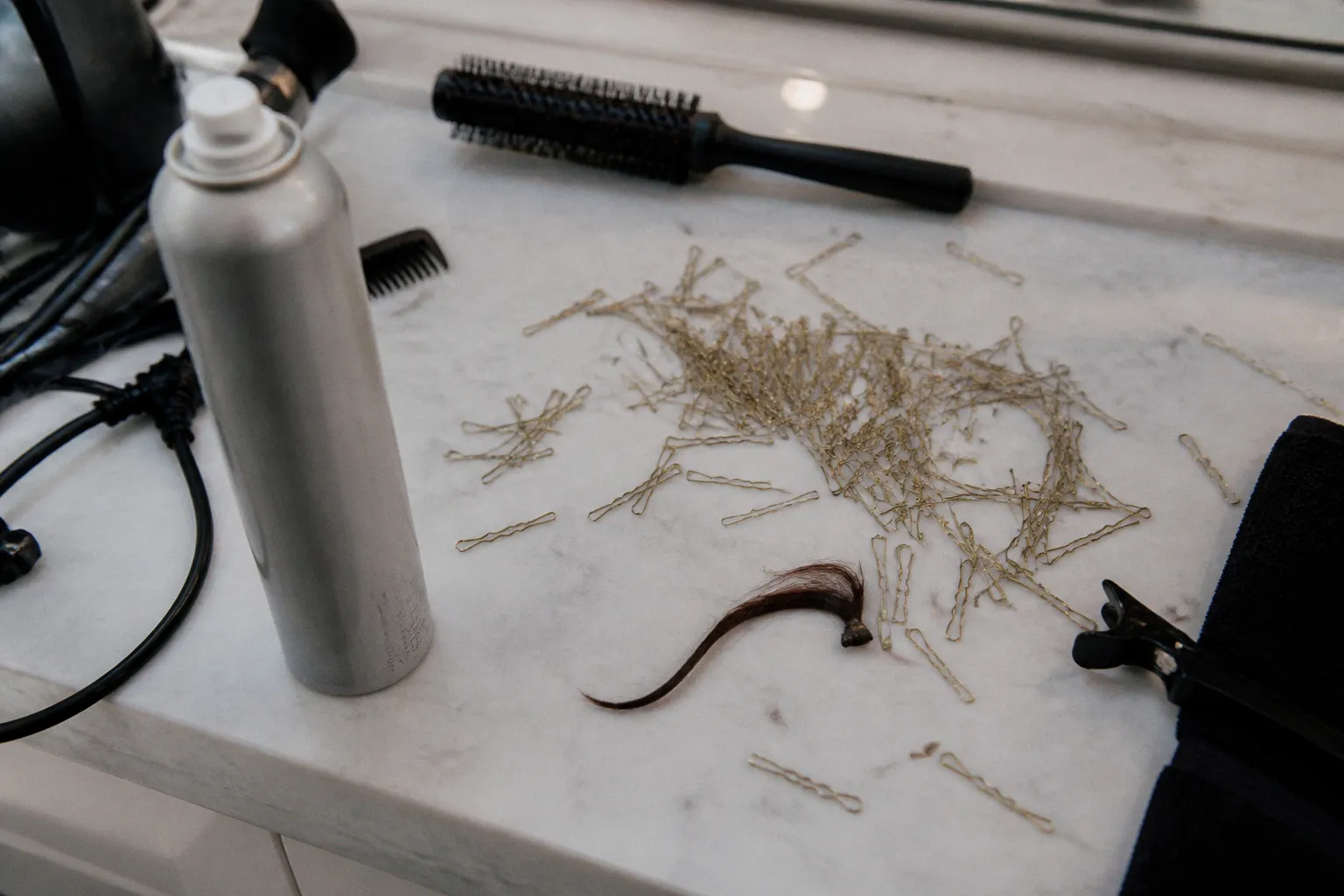
It has to survive sleep, weather, commutes, workouts, second-day roots, and the low-grade panic of trying to make a 9 a.m. styling decision with six minutes left.
That gap is where a lot of celebrity hair inspiration becomes frustrating. The cut is not necessarily wrong; the expectation is. A sleek bob can look like a declaration on a red carpet and like a negotiation with a round brush by Tuesday morning. A shag can read intentionally undone in a campaign image, then genuinely undone in the rain—unless its layers were cut for your texture, not someone else’s.
We put the most persistent red carpet hair trends through a practical filter: how much daily intervention they ask for, how gracefully they grow out, how dependent they are on a particular texture, and whether the look retains its basic point once no professional is standing nearby with pins and a high-powered dryer. The result is not a ranking of the prettiest looks. It is a more useful distinction between hairstyles with sustainable appeal and hairstyles that demand a lifestyle arrangement.
A celebrity haircut is wearable when its structure does some of the work after the glam team leaves.
The Myth of the “Rachel” and Other High-Maintenance Icons
The “Rachel” remains the clearest example of a hairstyle becoming bigger than its own practical reality. When Jennifer Aniston debuted the cut in 1995, the layered, face-framing shape quickly became a mass request. It had movement, polish, and enough personality to make a basic salon appointment feel like participation in pop culture.
But the narrative control around the cut was always better than the home-styling experience. Aniston herself later called it the “ugliest haircut I’ve ever seen” in 2011 and described it as “cringey” in 2015. That is not revisionist embarrassment. It is an honest acknowledgement that a famous haircut can still be a demanding one.
The Rachel’s architecture relies on deliberate styling: the right blow-dry direction, the right tension, and layers that do not expand unpredictably once they meet the wearer’s natural volume. During Will & Grace, stylists reportedly spent three hours trying to recreate the look on Debra Messing. Without the involvement of Chris McMillan, who created the original cut, the result was described as mushroom-like—a cautionary outcome driven not by anyone failing at hair, but by the mismatch between the cut’s structure and Messing’s natural volume.
That is the emotional reality of a high-maintenance celebrity haircut. If you choose it because it looks carefree, then the relationship may disappoint you. If you choose it knowing that it needs regular heat styling and a cooperative texture, then you are making an informed agreement.
The Rachel is hardly alone. Many dramatic, heavily layered blowout cuts operate this way. They photograph beautifully because their shape is activated. On an ordinary day, their visual impact depends on whether you are willing to activate it again.
Here is the useful question: if the hairstyle’s identity disappears when you air-dry it, are you comfortable committing to heat styling several times a week? If yes, the maintenance is not a dealbreaker. If no, the haircut was probably sold to you on optics rather than compatibility.
Precision Bobs: Sharp Boundaries, Regular Appointments
The current bob conversation has two particularly visible branches: the clean, jawline-skimming blunt bob associated with Hailey Bieber and the upward-flipped “kicked bob” worn by Gigi Hadid and Greta Lee. Both are excellent examples of how a cut can look low-effort while requiring a surprisingly firm maintenance system.
The blunt bob is, on paper, the more straightforward option. It is a direct, sleek line around the jaw, and it can be easy to style because the silhouette is so clear. A quick pass with a dryer or straightener can restore its intention faster than it can with a highly layered cut.
But its boundaries are literal. There is not much length available for a real ponytail or bun, and even a half-up style may depend on clips, pins, and optimism. It also needs trims about every six weeks to preserve the crisp edge. When the ends start to soften or grow unevenly, the very thing that makes the blunt bob persuasive—its precision—starts to drift.
The kicked bob has a more playful public narrative. Its ends turn outward, giving the hair a contained, almost cinematic flick that can make a minimal outfit look considered. Yet it is not a universal shortcut to stylishness. The upward curve is especially flattering on oval faces, while on longer face shapes it can emphasize vertical length rather than balance it. To keep its sharp outline, it generally calls for salon maintenance every four to six weeks.
| Wearability question | Blunt Bob | Kicked Bob |
|---|---|---|
| Core effect | Sleek, polished, graphic line | Light, upward movement at the ends |
| Everyday styling | Relatively fast on naturally straight or smooth hair | Needs direction at the ends to look intentional |
| Updo flexibility | Limited | Limited |
| Trim rhythm | About every 6 weeks | About every 4–6 weeks |
| Best fit | Someone who likes a clean, controlled silhouette | Someone who wants a styled finish and has a face shape that suits the outward flick |
| Main tradeoff | Less flexibility between wash days and events | Can lose its shape—or overemphasize length—without careful tailoring |
There is a relationship-PR lesson in the bob’s staying power: clarity travels well. A blunt cut creates a strong narrative in a single image. It signals a reset, a new campaign, a new season, or simply a person who knows exactly where the line is. That is why it keeps returning around fashion weeks and major premieres.
But in real life, a crisp boundary requires upkeep. If your routine supports regular appointments and you do not rely on a high ponytail as an emotional support style, the blunt bob is one of the more durable celebrity hairstyle choices. If your hair routine is built around flexibility, it can feel restrictive very quickly.
The blunt bob is easy to style, not low-commitment. Those are different promises.
Why the Wolf Cut and Curtain Bangs Win on Ordinary Days
If bobs are about structure, the wolf cut is about built-in permission. The shag-mullet hybrid, favored in different versions by Paul Mescal and Timothée Chalamet, uses shorter layers through the crown and longer ends to create shape without demanding a smooth finish. On wavy and curly hair in particular, those layers tend to hold their own movement with little to no daily styling.
That distinction matters. A haircut that works with texture produces a more stable relationship with the mirror. It does not require the wearer to correct their hair every morning into a texture it does not naturally want to be.
The wolf cut is also unusually forgiving of the slightly imperfect day. A little puffiness, a bend in the fringe, uneven air-drying—these can read as part of the look rather than evidence that the look has failed. Of all the easy celebrity hairstyles currently in circulation, this is the one most likely to retain its character after a long day.
That does not mean every wolf cut is interchangeable. Fine, straight hair may need a more restrained version, with enough density left at the perimeter to avoid a sparse, over-layered effect. Thick hair can carry more internal removal, but it needs a stylist who understands where volume should remain. The look is relaxed; the cutting technique should not be.
Curtain bangs have a similarly practical advantage. Traditional short bangs can require trimming roughly every two weeks to stay in their intended zone. Curtain bangs, by contrast, are softer at the center and longer at the sides, so they grow out with far less drama. They can be blow-dried away from the face for a fuller effect or allowed to fall more naturally when time is limited.
For people drawn to celebrity hair inspiration but wary of a full fringe, curtain bangs are a smart compromise. If you love the framing effect but do not want to schedule your life around bang trims, they offer the visual payoff with more room for life to happen.
The most workable versions of these low-effort styles share a few traits:
1. They respect natural texture rather than fighting it. A wolf cut on waves should make the waves more legible, not demand that they become pin-straight.
2. They still look like themselves when slightly imperfect. This is the difference between a hairstyle and a temporary styling trick.
3. They grow out with options. Curtain bangs can become face-framing layers; a longer shag can be adjusted rather than abruptly abandoned.
4. They do not depend on a single tool. If a cut only works with one brush, one iron, or one exact product, it has a narrower everyday life than the campaign image suggests.
The broader lesson is not that polished hair is bad or undone hair is morally superior. It is that the best celebrity hairstyle test is a compatibility test. If your texture, schedule, and styling tolerance align with the cut, it can look expensive with very little visible effort. If they do not, the same cut can turn into a daily source of narrative conflict.
The Wet Look Is Not Actually “Wet”
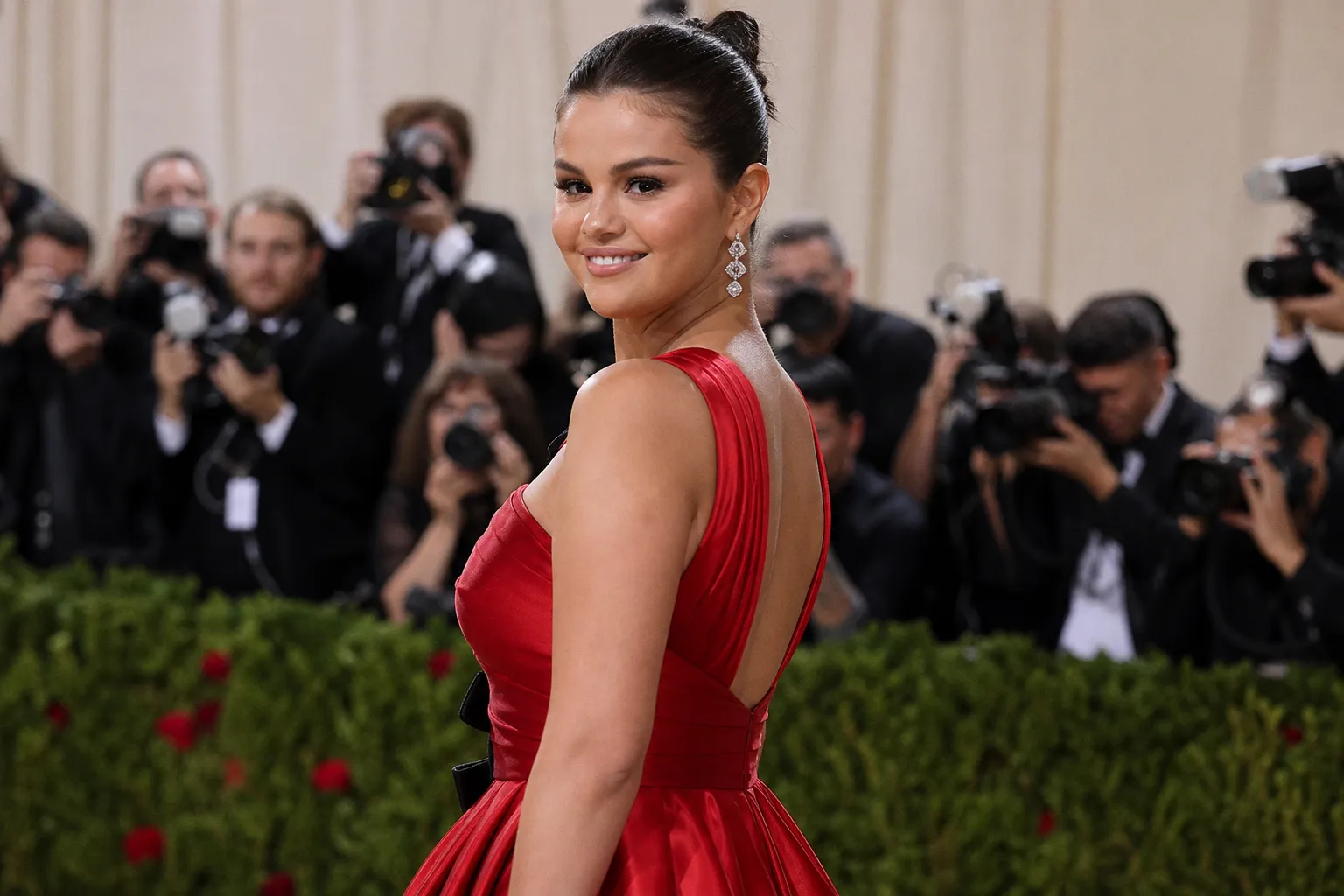
Kim Kardashian’s wet-hair look has been a red-carpet constant because it gives an evening gown a useful counterpoint: the dress may be ornate, but the hair reads clean, graphic, and close to the body. It is one of fashion’s most efficient visual messages. It says intentionality without asking for curls, accessories, or height.
At home, however, the line between editorial shine and genuinely greasy-looking hair is thin. The wearable version depends less on using a huge amount of product than on placing a smaller amount with discipline. Shine products should be worked in light layers and kept away from the roots. Hair should then be separated into thicker ribbons, not pulled into thin, damp-looking strands.
That “ribbon” point is the entire game. Thin sections expose scalp, clump awkwardly, and create the impression that the hair needs washing. Broader, deliberate pieces hold enough dimension to look sculpted. The effect should be glossy, not congested.
This is a look with a short social shelf life, and that is fine. It is better for dinner, a party, a premiere-adjacent event, or any occasion when you can arrive shortly after styling. It is not especially forgiving after a commute, under a hat, or through humid weather. If the product breaks down or the hair separates too much, the optics change fast.
The same principle applies to dramatic extensions. Celebrity hair transformations often make length seem effortless because they are designed to create impact from a distance. In everyday terms, 16-inch extensions are the more convincing sweet spot: enough added length and volume to change the silhouette, without announcing themselves in every candid photo. At 26 inches, extensions become a statement. That can be exactly the point for an awards show, a music video, or a high-fashion moment—but it is not the same as natural-looking daily volume.
There is no need to treat dramatic length as a mistake. It simply needs honest positioning. If you want a hair look that carries a room, 26 inches can do that. If you want to look like yourself on a very good hair day, 16 inches is the more strategic choice.
And for anyone building a full evening around a major awards broadcast or a celebrity-heavy reality reunion, it is worth pairing the look with a reliable guide to what is streaming and when. Glam has better emotional pacing when you are not also scrambling to find the show.
The Bixie Is a Better Transition Than a Panic Chop
The bixie—a hybrid of pixie and bob—has emerged as one of the more emotionally intelligent short cuts in the celebrity style cycle. Zoë Kravitz wore a version at the 2025 Academy Museum Gala, and the appeal was clear: it has the lightness of a short cut without the all-or-nothing finality of a classic pixie.
This is not just a trend distinction. It is a decision-making distinction.
A full pixie can be exhilarating, especially after a long period of maintaining extensions, color, or substantial length. But it also changes the daily framework: face, neckline, makeup balance, earrings, and wardrobe proportions all become more visible. That can feel freeing, or it can feel like too much exposure if the decision was made in a rush.
The bixie creates a gentler transition. It keeps enough length around the perimeter to soften the move into shorter hair while still taking away the weight and repetition of a bob. It is particularly useful for someone who wants to experiment with cropped proportions but is not ready to commit to a pixie or a more pronounced mullet shape.
If you are thinking in if/then terms, the choice gets clearer:
- If you want short hair but still need visual softness around the face, then a bixie is usually safer than a blunt pixie.
- If you regularly pin back your hair or depend on a ponytail, then a bixie may feel more limiting than its slightly longer shape suggests.
- If you are growing out a very short cut, then a bixie can provide a purposeful middle chapter instead of an awkward waiting period.
- If your hair is very dense, then the internal layering needs particular care; otherwise, the cut can become bulky rather than airy.
The bixie is not “no-maintenance,” because short hair still reveals growth quickly. But it is lower stakes than the fantasy of a dramatic chop would suggest. It offers a new silhouette without demanding that you become a totally new person in the process.
Our Verdict: Choose the Hairstyle That Has a Life Beyond the Photo
The most wearable celebrity style hairstyles are not necessarily the ones that look least styled. They are the ones with a clear agreement between the cut, the texture, and the person maintaining it.
For low daily effort, the wolf cut is the strongest performer—particularly on wavy or curly hair—because its layered structure can hold shape without constant correction. Curtain bangs are the best low-risk add-on for anyone craving a visible change without the rigid maintenance schedule of a traditional fringe.
For a cleaner, more controlled silhouette, the blunt bob is the better bet than the kicked bob for many people, provided they accept its six-week trim rhythm and limited updo options. The kicked bob earns its place when the face shape and styling appetite are right, but it is not a universal shortcut.
The wet look and ultra-long extensions belong in a different category: high-impact tools, not daily default settings. They are excellent when the occasion calls for clear visual drama. They are less convincing when forced into an ordinary schedule.
And the bixie is the quiet sleeper of the group. It has enough red-carpet credibility to feel fresh, but enough practical flexibility to make sense beyond one impulsive salon visit.
Hollywood tends to reward transformation because transformation photographs well. Real life rewards a haircut that still feels like you on day four, in imperfect weather, with no one else managing the lighting. That is the boundary worth keeping: choose the look that supports your life, not the one that requires your life to support the look.