Celebrity style men: the red carpet trends to adopt or avoid
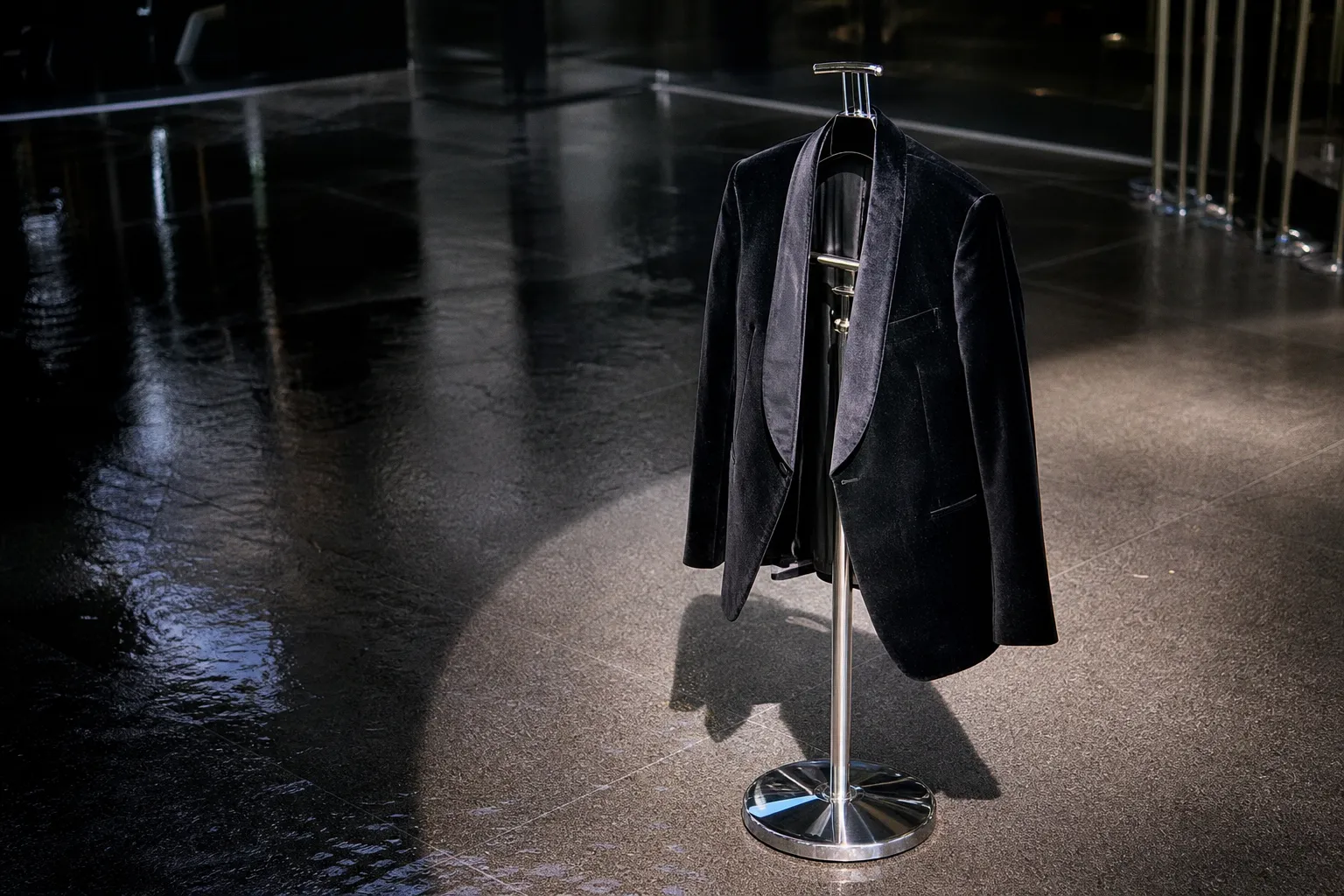
The shift is not simply “more fashion.” It is a recalibration of optics: a classic tuxedo still communicates respect for an institution, while a monochrome plum suit, a low-cut silk shirt, or a statement brooch tells the room that the wearer wants authorship over the narrative.
The 98th Academy Awards made that divide unusually clear. Timothée Chalamet arrived in off-white Givenchy, carrying the color through his shirt, tie, and shoes. Miles Caton went fully monochrome in plum AMIRI. Michael B. Jordan let a gold pocket chain do the talking against his Louis Vuitton suit. Meanwhile, Ryan Coogler and Jacob Elordi were among the men who stayed with traditional bow ties. None of these choices cancelled out the others. They served different moments.
That is the useful lesson behind today’s mens celebrity fashion trends: the red carpet is not one dress code, and neither is real life. The best celebrity-inspired outfits for guys borrow the discipline of a strong look—not necessarily its loudest detail.
The standard tuxedo is not dead. It has just lost its monopoly
For years, “red carpet menswear” meant a black tuxedo, a white shirt, and an emergency-level fear of individuality. Hollywood has clearly moved past that default. Younger actors, in particular, have embraced designer reinterpretations: softened structure, leaner proportions, coordinated color, unusual lapels, and accessories that once would have been dismissed as too much.
But there is a distinction worth protecting. A creative premiere is one thing. A genuine black-tie invitation is another.
A tuxedo is not a vague suggestion to wear a dark suit. Conventional black tie has actual components: a black dinner jacket with matching trousers, a formal white shirt, a black bow tie, a cummerbund or formal vest, black patent shoes, and black dress socks. A dark suit can work for black-tie optional. It does not replace a tuxedo at standard black tie.
That may sound restrictive, but boundaries are often what make experimentation land. If the event gives you room to bend the rules, a colored suit can be memorable. If it does not, forcing “fashion” into the wrong setting can read less like confidence and more like a failure to understand the assignment.
| Occasion | Strong choice | What to leave on the rack |
|---|---|---|
| Strict black-tie gala | Black or midnight-blue tuxedo, bow tie, polished black shoes | A black business suit with a long tie; novelty sneakers |
| Film premiere or fashion event | Tonal suit, sharper silhouette, expressive jewelry | Every trend in one look: sheer shirt, oversized brooch, loud shoe, and colored leather |
| Wedding with cocktail attire | Dark suit, excellent shirt fit, considered pocket square or small pin | Full awards-show styling that competes with the couple |
| Dinner, date, or creative work event | Clean tailoring with one point of view: color, texture, or accessory | Costume-level pieces with no relationship to the setting |
The most reliable male celebrity style icons understand that their clothing has a job. It might support a film launch, announce a designer relationship, or build a visual identity that separates them from everyone else in a cast photo. Off the carpet, the job is simpler: look intentional without making the people around you feel as if they accidentally walked into your press tour.
The modern move is not rejecting the tuxedo. It is knowing whether the room calls for tradition, interpretation, or restraint.
Skin-baring menswear is a red-carpet tool, not a universal upgrade
The most discussed red carpet looks for men this year have involved skin. Alexander Skarsgård has worked low-cut tops; Hudson Williams paired a tank with a skinny scarf; Colman Domingo has used deeply unbuttoned silk shirts; Harry Styles wore a Dior Bar jacket without a shirt. On the right person, at the right event, these looks create an immediate visual line: shoulder, chest, waist, confidence.
They also rely on infrastructure that is easy to overlook. Celebrity styling has fittings, tailoring, grooming, lighting tests, body makeup, posture coaching, and a photographer waiting at the exact angle designed to make the outfit work. That is not a criticism. It is simply the context.
If you take the shirt off the red carpet formula and place it in a restaurant, a wedding, or a work event, the narrative changes. Instead of “editorial,” the optics can become “why is this happening at 8:30 p.m. near the appetizer station?”
There are wearable versions of the same idea:
1. Choose a slightly open collar rather than an unbuttoned shirt. One or two buttons undone on a well-cut knit polo or silk-blend shirt creates ease without turning the look into a costume.
2. Use a fine-gauge tank as a layering piece. A fitted tank beneath an open overshirt or relaxed suit can nod to the trend while retaining visual boundaries. The tank should look deliberate, not like an undershirt that got pulled into daylight.
3. Let fabric provide the sensuality. A matte silk shirt, a sheer-but-lined knit, or a subtly translucent layer under a jacket gives texture and movement without requiring total exposure.
4. Keep the rest of the silhouette calm. If the neckline is low, do not add wide-leg trousers, a giant chain, platform boots, and a dramatic shoulder at the same time. A look needs one clear sentence, not five competing headlines.
The practical verdict is straightforward: skin-baring styling belongs in the “adopt selectively” column. It works when your setting has a fashion-forward social contract and when the garment itself fits impeccably. It is not a shortcut to confidence. If anything, it asks for more self-awareness.
The accessory renaissance is the easiest trend to borrow
This is where celebrity style men have something genuinely useful to offer the rest of us. Accessories are carrying more of the personality in 2026, and they do not require a private stylist or a movie-star comfort level with a bare chest.
Interest in men’s suit brooches rose sharply, with searches for “brooch for men’s suit” up 90%. Searches for maximalist accessories rose 105%, heirloom jewelry 45%, lapel shirts 95%, and tie accessories 85%. Those figures are not a command to pin a chandelier to your blazer. They do, however, reflect a real appetite for detail after years of minimalist menswear.
Michael B. Jordan’s gold pocket chain at the Oscars is a good example of disciplined styling. The chain did not replace the suit. It sharpened its point of view. A small piece of metal changed the silhouette and gave photographers something to notice without creating visual noise.
The key is to treat jewelry as a conversation between items, not a collection of trophies.
Start with one personal object
A vintage signet ring, a family watch, a modest lapel pin, or a small brooch can establish character. Heirloom jewelry is especially compelling because it brings a human story into an otherwise polished outfit. It does not have to be expensive or historically important. It has to feel chosen.
If you wear a brooch, place it on the left lapel, where a boutonnière would traditionally sit. Avoid pinning it too low, too close to the pocket, or directly on a very thin fabric that cannot support the weight. A brooch that droops or pulls at the jacket undermines the composed effect you were aiming for.
Match the accessory to the suit’s emotional temperature
A black dinner jacket can handle a silver or crystal-like pin. A brown, olive, or navy textured suit tends to work better with antique gold, brass, stone, or enamel. A colorful suit already has a strong narrative, so the accessory should usually be smaller and quieter.
There is also a relationship between scale and intimacy. A tiny vintage pin invites someone to notice it up close. A large brooch announces itself from across a ballroom. Neither is wrong, but they create very different optics.
Do not confuse maximalism with accumulation
The current appetite for maximalist accessories is real, yet celebrity styling succeeds because someone has edited it. If you wear a brooch, skip the pocket chain. If you wear several rings, keep the lapel clean. If a necklace is visible under an open shirt, let the wrist and hands breathe.
Accessories work when they look like part of your identity, not evidence that you read one trend report too quickly.
For most men, this is the clearest “adopt” category in wearable celebrity trends. One well-selected accessory can make an ordinary navy suit feel personal, while a full runway interpretation may only make it feel rented.
Tailoring is getting sharper, but not smaller at all costs
The fitted return has been building quietly. Forecasts for fall/winter 2026 point to rising social-media visibility for fitted-waist outerwear, straight-fit outerwear, fitted tops, and slim-fit tops. That is not proof that relaxed tailoring is over. It is evidence that the pendulum has moved away from the most exaggerated oversized silhouettes.
The nuance matters. “Fitted” should mean that the garment recognizes your body. It should not mean that the jacket strains when you sit down or that your trousers pull across the thigh every time you take a step.
Timothée Chalamet’s off-white Oscars look worked partly because of its clean, controlled line. The monochrome palette made the tailoring more visible: the shoulder placement, the waist shape, the trouser break, the continuity from shirt to shoe. Miles Caton’s plum AMIRI ensemble operated similarly. The color was bold, but the proportions remained coherent.
For celebrity-inspired outfits for guys, the useful tailoring priorities are less dramatic:
- Get the shoulders right first. A jacket shoulder that extends beyond your own shoulder or collapses inward will make any expensive suit look uncertain.
- Aim for a defined waist, not a pinched waist. You should be able to button the jacket without pulling lines radiating from the closure.
- Choose trouser width based on your shoe and build. Straight trousers are broadly forgiving. Very slim trousers can look dated when paired with chunky shoes; very wide trousers need enough jacket structure to balance them.
- Watch the sleeve length. A small amount of shirt cuff visible is often more polished than a jacket sleeve that swallows the hand.
- Tailor the shirt as carefully as the suit. A baggy shirt underneath a precise jacket creates a disconnect no brooch can solve.
The fashion conversation often frames tailoring as a binary: skinny versus oversized. In practice, the better question is whether the proportions are in emotional alignment. A relaxed suit can look assured when it is intentionally roomy. A slim suit can look modern when it follows the body without fighting it. What looks awkward is indecision: oversized shoulders with tight sleeves, cropped trousers with puddling hems, or a fitted jacket over a billowing shirt.
If your body has changed, or your wardrobe has drifted toward one extreme, start with a tailor before you start with a trend. That is not glamorous advice, but it is how red-carpet styling actually protects its own narrative control.
Color coordination is more wearable than statement color
Monochrome dressing is having a strong celebrity moment because it gives the eye a clear path. Chalamet’s off-white suit, shirt, tie, and shoes created one uninterrupted story. Caton’s plum look did the same in a richer register. The appeal is not merely that the outfits photograph well. It is that color coordination makes an experimental suit feel resolved.
For everyday life, all-white is a high-maintenance commitment and plum tailoring is not everyone’s preferred entry point. But tonal dressing is remarkably adaptable.
Try charcoal with soft gray, navy with ink blue, chocolate with tobacco, olive with moss, or cream with warm beige. The colors do not need to match exactly. They need to belong to the same family. A variation in texture—wool trousers with a knit top, for example—keeps the outfit from looking flat.
There is one caveat: tonal dressing exposes fit and fabric quality. When everything is one color family, there is nowhere for a poorly fitted jacket or a tired shoe to hide. If the clothes are not in good condition, add contrast instead: a white shirt, dark shoe, or a restrained belt can reset the balance.
Color is also where personal brand matters. If you are known for quiet, practical clothing, suddenly appearing in a head-to-toe jewel tone may feel like a costume to you before anyone else reacts. Build the transition in stages: begin with a tonal shirt and trousers, then add the matching jacket when the silhouette feels natural.
Decode the invitation before you try to decode the trend
The question behind nearly every red-carpet experiment is not “Can I pull this off?” It is “What is this outfit asking the room to understand about me?”
That is where Hollywood’s strategic instincts are more useful than its most viral looks. A celebrity may wear a bare chest under a formal jacket because the moment is designed to generate fashion coverage. A musician may choose colorful leather because their performance persona has already created permission for it. An actor at the Oscars may honor classic black tie because the ceremony itself is part of the message.
If the event is formal and traditional, then dressing traditionally is not a lack of imagination. It is social fluency. If the event is creative and your role allows for expression, then a strong accessory, a tonal suit, or a more sculpted silhouette can give you distinction without making you look disconnected from the room.
A practical hierarchy helps:
1. Honor the stated dress code. No trend is worth looking disrespectful to hosts, colleagues, or the occasion.
2. Choose one visual signature. It can be color, tailoring, jewelry, fabric, or an unconventional shirt. Pick one.
3. Make comfort part of the fit test. Sit, reach, walk, and stand under bright light. Clothes that demand constant adjustment do not project ease.
4. Edit once before leaving. Remove the least necessary item. This is especially effective with jewelry, scarves, and embellished footwear.
5. Let the outfit support your presence. If you are spending the evening explaining the look, it is probably wearing you.
The fashionable man in 2026 is not necessarily the one in the sheerest top or the brightest jacket. He is the one who can read the environment, set a boundary around how much attention he wants, and use clothing to communicate rather than compensate.
The strongest red carpet looks for men are built on that same emotional intelligence. They may look spontaneous in photographs, but their success is usually the result of precise choices: proportion, context, restraint, and a clear understanding of what belongs to the person wearing them.
So adopt the brooch. Explore tonal color. Ask your tailor for shape rather than shrinkage. Keep a proper tuxedo available for the invitations that truly require one. And leave the shirtless Dior-jacket energy for the rare moment when the setting—and your own sense of self—can genuinely carry it.